
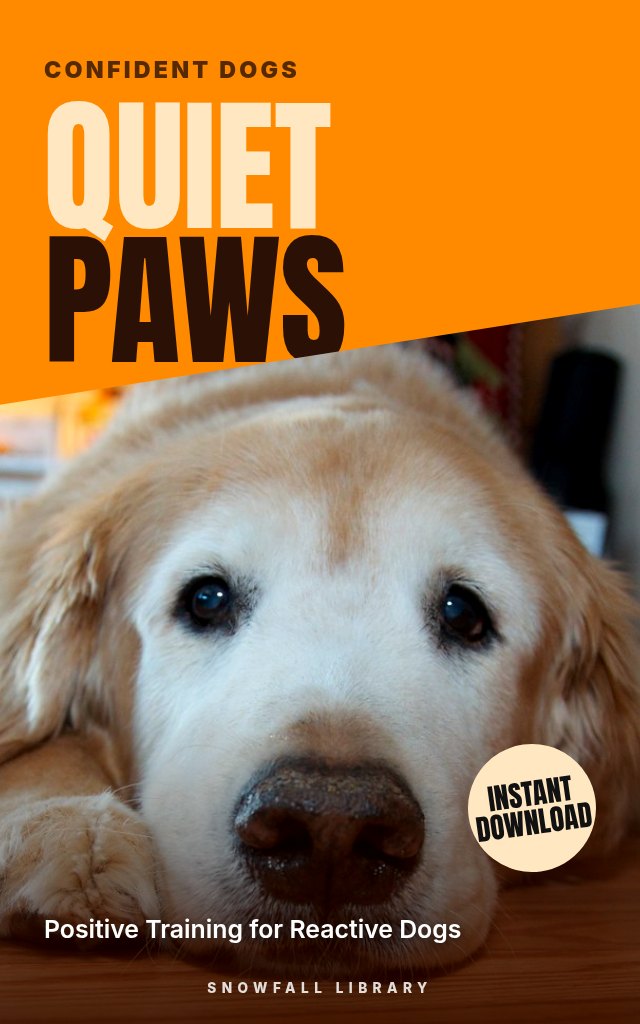
Calm Companion: Reactive Dogs
A Simple Plan to Reduce Fear and Build Confidence
About this guide
- Dog owners dealing with barking, lunging, or fearfulness towards people or other dogs.
- Those who’ve tried basic training but still struggle with consistent progress.
- People who believe in kind, positive methods that prioritize their dog’s emotional wellbeing.
- Owners ready to commit to consistent training, and remember their own self-care.
- A clear understanding of the root causes of reactivity, and how to pinpoint your dog’s triggers.
Product details
| Publisher | Snowfall Library (founded by Max) |
|---|---|
| Format | PDF Guide |
| Length | 20+ pages |
| Language | English |
| Delivery | Instant download after payment |
| Reads on | Phone, tablet, Kindle app or computer |
| Category | Pets |
Better together
Add these to your order and save 35% on each one.
Book description
It’s heartbreaking when your dog lives with constant fear or frustration. You’re likely seeking a solution that truly understands why they react, and offers more than just quick fixes.
Who it's for
- Dog owners dealing with barking, lunging, or fearfulness towards people or other dogs.
- Those who’ve tried basic training but still struggle with consistent progress.
- People who believe in kind, positive methods that prioritize their dog’s emotional wellbeing.
- Owners ready to commit to consistent training, and remember their own self-care.
What you’ll walk away with
- A clear understanding of the root causes of reactivity, and how to pinpoint your dog’s triggers.
- Techniques to build confidence and impulse control, creating a foundation for calm behavior.
- Practical strategies to apply desensitization and counter-conditioning in real-world situations.
- Skills to manage stress, maximize safety, and create a more peaceful home environment.
- A sustainable plan for long-term wellbeing, for both you and your dog.
What's inside
- Understanding Reactivity: The Why Behind the Behavior
- Building the Foundation: Confidence, Impulse Control & Safety
- Desensitization & Counter-Conditioning: The Core of the Plan
- Targeted Protocols: Applying DS/CC to Common Triggers
- Management Strategies: Minimizing Stress & Maximizing Safety
- Owner Wellbeing & Long-Term Maintenance
Look inside
Understanding Reactivity: The Why Behind the Behavior
What Is Reactivity? Defining the Problem and Debunking Myths
You’re likely here because walks aren’t the relaxing experiences you hoped for. Maybe your dog barks, lunges, or growls at other dogs, people, cars, or even things that seem harmless. You might find yourself constantly scanning your surroundings, bracing for a reaction, feeling embarrassed, and deeply worried about your dog’s wellbeing, or even that they might unintentionally hurt someone. You’ve probably tried basic obedience training, but haven’t seen the lasting improvements you were hoping for. If this sounds familiar, you’re not alone. Many dogs exhibit reactive behaviors, and understanding what reactivity is, and what it isn’t, is the first, crucial step towards helping your dog and regaining your peace of mind.
Defining Reactivity: It's Not Just “Bad Behavior”
Reactivity is an emotional response. It’s a delayed or exaggerated reaction to something your dog perceives, a sight, sound, smell, or even something they anticipate. Think of it as your dog feeling overwhelmed and responding with behaviors like barking, lunging, growling, whining, or trying to hide. These aren’t deliberate choices; they’re instinctive attempts to cope with something they find threatening or unpleasant.
Reactivity exists on a spectrum. A mild reaction might be a quick glance and a stiffening of the body. A more intense reaction could involve frantic barking, lunging at the end of the leash, and attempts to bite. The intensity doesn’t define the cause of the reactivity; it’s about your dog’s emotional state.
Example: Imagine you’re walking down a busy street and someone unexpectedly steps in front of you. You might jump and quickly regain your composure. Now imagine that same person repeatedly cuts you off, gets very close, and makes unpredictable movements. You’re more likely to feel anxious, tense, and perhaps even angry. Your dog’s reactivity is similar, a response to perceived pressure or a lack of control.
Reactivity vs. Aggression: Knowing the Difference
It’s vital to understand that reactivity and aggression aren't the same thing. Aggression implies an intent to harm. Reactivity is often fear-based and aimed at increasing distance between your dog and whatever they perceive as a threat. While a reactive dog can bite, it’s usually a last resort, a desperate attempt to create space.
Here's a breakdown:
| Feature | Reactivity | Aggression |
|---|---|---|
| Motivation | Fear, anxiety, frustration | Dominance, possessiveness, territoriality, pain |
| Body Language | Stiffening, whale eye, lip licking, yawning, barking, lunging | Stiff posture, hard stare, raised hackles, growling, snapping, biting |
| Intent | Increase distance, avoid threat | Harm or control |
| Escalation | Often stops with distance gained | Can quickly escalate to biting |
Important: It’s always best to consult with a qualified veterinary behaviorist or certified professional dog trainer to accurately assess your dog’s behavior and rule out any underlying medical causes. Mislabeling reactivity as aggression (or vice versa) can lead to inappropriate training methods.
Debunking Common Myths
For years, dog training relied on outdated and sometimes harmful ideas. Let’s clear up a few common misconceptions:
- Myth: Dominance Theory. The idea that dogs are constantly trying to “dominate” us and that we need to be “alpha” is largely discredited. Reactivity isn’t about your dog trying to be the boss; it’s about feeling unsafe and trying to manage a situation they perceive as threatening. * Myth: Punishment Will Stop Reactivity. Punishment, yelling, leash corrections, or physical corrections, actually worsens reactivity. It increases fear and anxiety, and can lead to your dog suppressing their warning signals (like growling) and going straight to biting. It damages your relationship and erodes trust. * Myth: “They Just Need to Be Socialized More.” While early socialization is important, reactivity can develop at any age, often due to a negative experience or ongoing stress. Simply throwing a reactive dog into more social situations will likely make things worse. * **Myth: My Dog is Being ...
Readers also browse

A Toddler Sleep Plan That Fits Your Family
Help Your Anxious Dog Feel Safe, One Step at a Time
Calm Fixes for Barking, Chewing, Reactivity and More
Understand the Meltdowns and Respond With Connection