
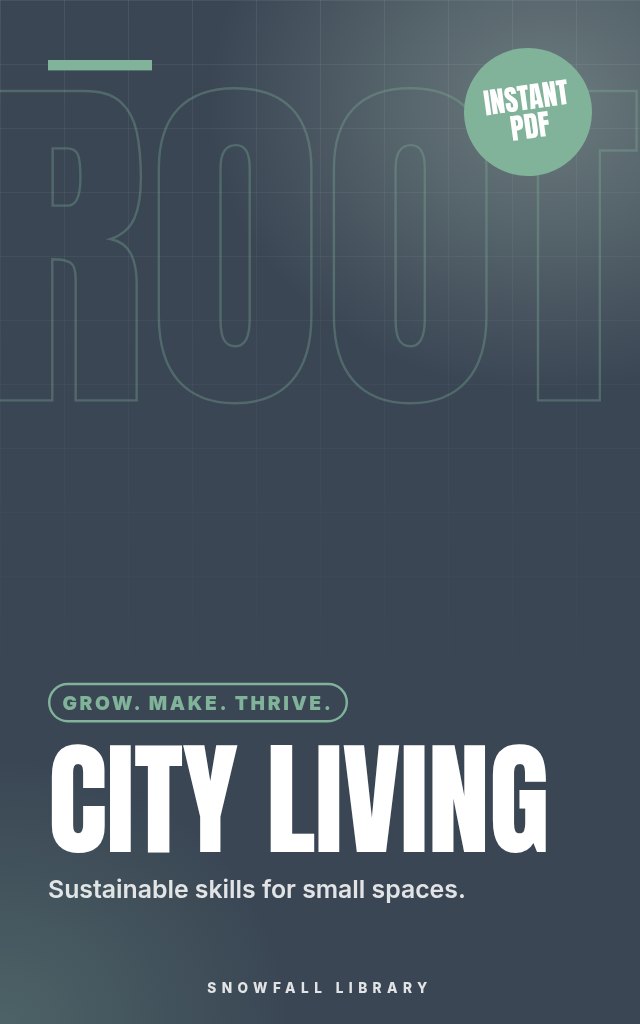
Concrete Roots: City Living
Grow Food, Preserve Bounty, and Build a Sustainable Life Anywhere
About this guide
- Millennials and Gen Z renters or homeowners in apartments, condos, or small homes.
- People interested in self-sufficiency, reducing waste, and saving money on groceries.
- Beginners wanting to learn practical homesteading skills without a lot of space or experience.
- Anyone looking for a more intentional, sustainable lifestyle.
- Techniques for assessing your space and maximizing growing potential, from balconies to windowsills.
Product details
| Publisher | Snowfall Library (founded by Max) |
|---|---|
| Format | PDF Guide |
| Length | 20+ pages |
| Language | English |
| Delivery | Instant download after payment |
| Reads on | Phone, tablet, Kindle app or computer |
| Category | Gardening & Homesteading |
Better together
Add these to your order and save 35% on each one.
Book description
Feeling disconnected from where your food comes from? Want to live more intentionally, but think you need acreage? It’s easier than you think to bring the homesteading spirit home, no matter your location.
Who it's for
- Millennials and Gen Z renters or homeowners in apartments, condos, or small homes.
- People interested in self-sufficiency, reducing waste, and saving money on groceries.
- Beginners wanting to learn practical homesteading skills without a lot of space or experience.
- Anyone looking for a more intentional, sustainable lifestyle.
What you'll walk away with
- Techniques for assessing your space and maximizing growing potential, from balconies to windowsills.
- Skills in preserving your harvest through fermentation, drying, and small-batch canning, extending the flavors of the season.
- Recipes and instructions for making your own cleaning products, toiletries, and simple home goods, reducing reliance on store-bought items.
- Strategies for reducing waste, composting in small spaces, and resourceful living, minimizing your environmental impact.
- Knowledge of how to connect with local resources and build a more sustainable community, fostering a sense of place.
What's inside
- Part 1: Foundations - Assessing Your Homestead Potential
- Part 2: Growing Food - From Balcony to Table
- Part 3: Preserving the Harvest - Extending the Bounty
- Part 4: Small-Batch DIY - Making Your Own Essentials
- Part 5: Resourcefulness & Reducing Waste - Living with Less
Look inside
Part 1: Foundations - Assessing Your Homestead Potential
Decoding Your Microclimate: Light, Space, and Airflow
Let’s be real. You’re probably not moving to a farm. Most of us aren’t. We’re making it work with what we’ve got, apartments, balconies, small yards, maybe a sunny windowsill. Before you picture overflowing harvests or a fully stocked pantry, you need to understand where you can actually make things happen. This isn’t about dreaming big; it’s about being realistic about your space and resources. Knowing your microclimate, the specific conditions of your little corner of the world, is the first step. It dictates what you can grow, what DIY projects are practical, and how successful you’ll be.
Light: The Energy Source
Light is the most crucial element. Plants need it, obviously, but it also impacts where you can comfortably work on projects and even how quickly things dry.
Why it matters: Different plants have different light requirements. Some thrive in full sun (6+ hours of direct sunlight), others prefer partial shade (3-6 hours), and some can tolerate low light conditions. Knowing what you’ve got will save you a lot of heartache, and dead plants.
How to assess: Forget general directions (south-facing is best!). You need specifics.
- The Sun Tracker: Over a single clear day, observe how sunlight hits your potential growing areas. Note the duration of direct sunlight, not just if it's sunny. Thirty minutes of sun isn’t the same as six hours.
- The Shadow Test: At noon, place a stick or ruler vertically in your growing area. Measure the length of the shadow. A short shadow means strong, direct light. A long shadow indicates weaker, indirect light.
- The Window Factor: Consider these categories:
- South-facing: Generally the brightest, best for sun-loving plants.
- East-facing: Morning sun, good for herbs and leafy greens.
- West-facing: Afternoon sun, can be intense, good for some vegetables, but watch for scorching.
- North-facing: Lowest light levels, best for shade-tolerant plants (and might not be suitable for growing much at all).
- Obstructions: Trees, buildings, even neighboring balconies can cast shadows. Account for these when assessing light levels.
Light Level Cheat Sheet:
| Light Condition | Sunlight Duration | Shadow Length at Noon | Suitable Plants |
|---|---|---|---|
| Full Sun | 6+ hours | Very short (under 6 inches) | Tomatoes, peppers, cucumbers, rosemary, thyme |
| Partial Shade | 3-6 hours | Moderate (6-12 inches) | Lettuce, spinach, kale, strawberries, parsley, cilantro |
| Low Light | Less than 3 hours | Long (over 12 inches) | Snake plants, pothos, peace lilies, some leafy greens |
Action step: Spend one full day tracking sunlight in your potential growing spaces. Use a notebook or your phone to record observations every hour.
Space: Beyond Square Footage
We often think of space in terms of square feet, but that’s limiting. Urban homesteading is about maximizing all available space, including vertical surfaces.
Why it matters: Limited space means prioritizing what you grow or make. It also forces you to get creative with storage and organization.
How to assess:
- The Floor Plan: Sketch your apartment or home, including all potential growing areas (windowsills, balconies, patios, even indoor spaces).
- The Vertical Inventory: Look up. Walls, railings, and even ceilings can be utilized with vertical gardening. Consider hanging planters, wall-mounted shelves, or a DIY vertical garden structure.
- The “Dead Space” Audit: Identify unused areas. That awkward corner? The space under your kitchen sink? The area behind the sofa? These can be repurposed for storage or small-scale projects.
- The 3D Calculation: Don’t just think about floor space. Calculate the cubic footage of your space. This will help you determine how much you can realistically grow or store. (Length x Width x Height = Cubic Footage)
Space Optimization Ideas:
- Balcony/Patio: Use tiered plant stands, hanging baskets, and wall-mounted planters to maximize vertical space. * Windowsills: Ideal for herbs, seedlings, and small vegetables. ...
Readers also browse

Fix It Yourself & Save, A Practical Guide for Homeowners

Vehicle Care
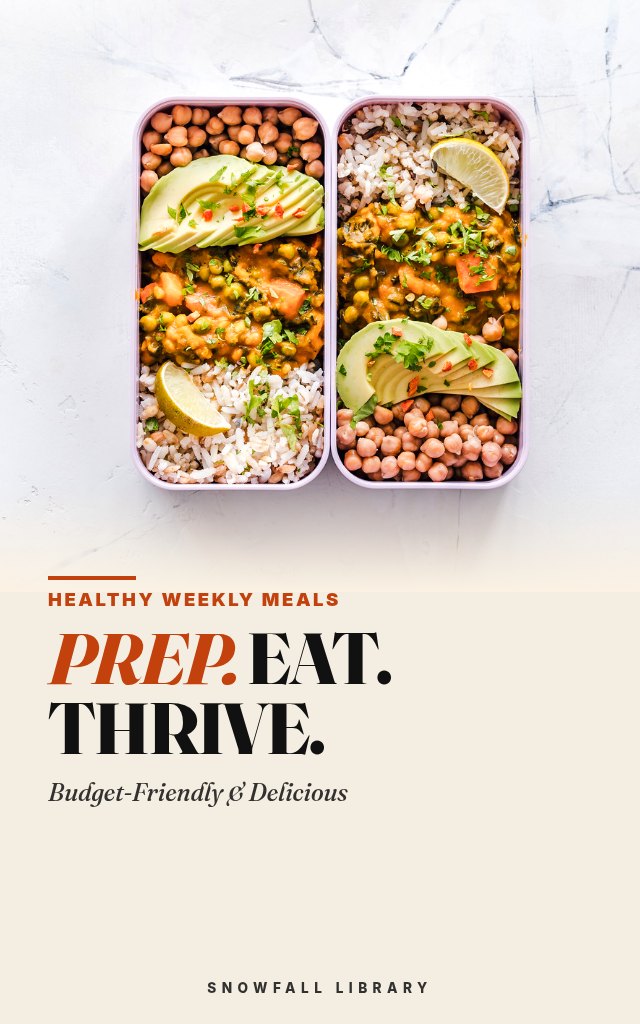
Cheap, Healthy Weekly Meal Plans for Busy Households

Make Your Home Feel Cozy With Light, Texture and Scent