
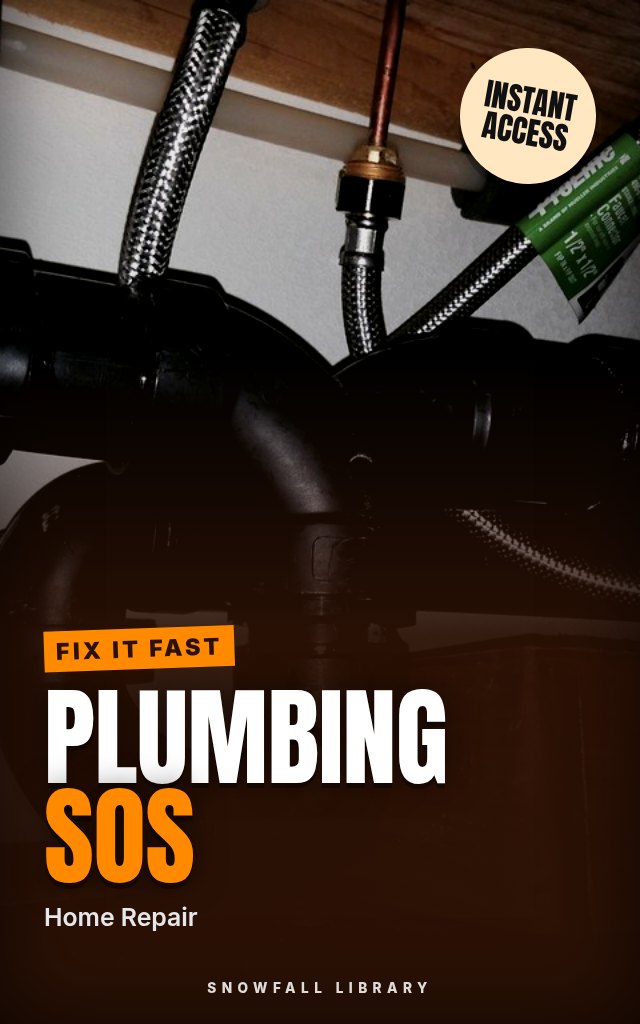
DIY Plumbing: Fix It Yourself & Save, A Practical Guide for Homeowners
Home Repair: Fix Leaks, Clear Drains & Save Money
About this guide
- First-time homeowners learning essential maintenance.
- DIY enthusiasts wanting to expand their skills.
- Anyone seeking to avoid expensive plumber calls.
- People who prefer hands-on home solutions.
- The ability to diagnose and repair leaky faucets and toilets.
Product details
| Publisher | Snowfall Library (founded by Max) |
|---|---|
| Format | PDF Guide |
| Length | 20+ pages |
| Language | English |
| Delivery | Instant download after payment |
| Reads on | Phone, tablet, Kindle app or computer |
| Category | Home Improvement |
Better together
Add these to your order and save 35% on each one.
Book description
A dripping faucet or slow drain can quickly disrupt your day, and your budget. This guide offers clear, practical solutions for homeowners who want to handle common plumbing repairs themselves.
Who it’s for
- First-time homeowners learning essential maintenance.
- DIY enthusiasts wanting to expand their skills.
- Anyone seeking to avoid expensive plumber calls.
- People who prefer hands-on home solutions.
What you’ll walk away with
- The ability to diagnose and repair leaky faucets and toilets.
- Techniques for effectively clearing blocked drains.
- Confidence in making basic pipe connections and repairs.
- A better understanding of your water heater and its common issues.
- Knowledge of when a DIY fix isn’t enough, and how to comply with local codes.
What's inside
- Understanding Your Plumbing System
- Leaky Faucets: Diagnosis & Repair
- Toilet Troubles: Fixing Common Issues
- Drain Cleaning: From Slow Drains to Major Clogs
- Pipe Repairs: Basic Techniques & Materials
- Water Heater Basics & Troubleshooting
- Navigating Plumbing Codes & Permits
Look inside
Understanding Your Plumbing System
Understanding Your Plumbing System: Water Supply & Distribution
Let’s face it: you probably don’t think much about your plumbing until something goes wrong. A dripping faucet, a clogged drain, or, worst of all, a sudden leak can quickly turn a peaceful home into a stressful situation. Knowing a little about how your water system works before a problem arises can save you significant money, prevent water damage, and give you the confidence to handle simple repairs. This section will cover how water enters your home, where to shut it off in an emergency, and the types of pipes you’ll likely encounter.
The Journey of Water into Your Home
Water doesn’t just magically appear at your faucets. It travels a surprisingly long route from the municipal water main or your private well, through a network of pipes, and ultimately to each fixture in your house. Understanding this journey helps you pinpoint potential issues.
The process starts with the water main, the large underground pipe that brings water to your property. From the water main, a smaller pipe called the service line connects to your home. This service line typically enters your house near the foundation and feeds into the main shut-off valve.
This valve is critical. Knowing its location and how to operate it can prevent major water damage during a leak or burst pipe. After the main shut-off, the water travels through a network of pipes, your home’s water distribution system, to reach faucets, toilets, showers, washing machines, and other fixtures.
Locating and Operating Your Main Shut-Off Valve
Finding your main shut-off valve is the single most important thing you can do to prepare for a plumbing emergency. It’s your first line of defense against costly water damage.
- Where to look:
- Inside the house: Basements, crawl spaces, utility rooms, and near where the water service line enters the house are common locations. Look along foundation walls.
- Outside the house: Check for a water meter, often located in a concrete or plastic box near the street. The shut-off valve is usually nearby, sometimes directly on the meter.
- Valve types: You’ll likely encounter one of two types:
- Gate valve: Has a round or oval handle that you turn multiple times to shut off the water. Turn clockwise to close.
- Ball valve: Has a lever handle. Turn the lever 90 degrees to shut off the water.
Action step: Right now, walk around your house and locate your main shut-off valve. Turn it slightly to ensure it’s not seized. If it’s difficult to turn, consider applying a lubricant like WD-40 (following product instructions) to loosen it. Make sure everyone in your household knows where it is and how to operate it.
Example: Imagine you’re doing laundry and the washing machine supply hose bursts. Knowing where your main shut-off is allows you to immediately stop the water flow, minimizing damage. Without that knowledge, you could be facing a flooded basement and a hefty repair bill.
Common Water Supply Pipe Materials
Over the years, different materials have been used for water supply pipes. Knowing what you have in your home is helpful for repairs and maintenance. Here's a breakdown of the most common types:
Copper
- Characteristics: Durable, long-lasting, resists corrosion. Traditionally the standard for water supply lines.
- Identification: Typically a reddish-brown color. Can be rigid or flexible.
- Pros: Reliable, good water quality.
- Cons: Expensive, requires soldering for connections (which can be tricky for beginners), susceptible to theft due to its scrap value.
- Lifespan: 50+ years with proper maintenance.
PEX (Cross-linked Polyethylene)
- Characteristics: Flexible plastic tubing, becoming increasingly popular. * Identification: Usually colored (red, blue, or white). * Pros: Relatively inexpensive, easy to install (uses push-fit or crimp connections, eliminating soldering), freeze-resistant (more flexible than copper), quieter than rigid pipes. * Cons: Can be damaged by UV light (shouldn't ...
Readers also browse

Cheap, Healthy Weekly Meal Plans for Busy Households

Make Your Home Feel Cozy With Light, Texture and Scent
Engineer a Warm Off-Grid Cabin That Handles Real Winter

Vehicle Care