
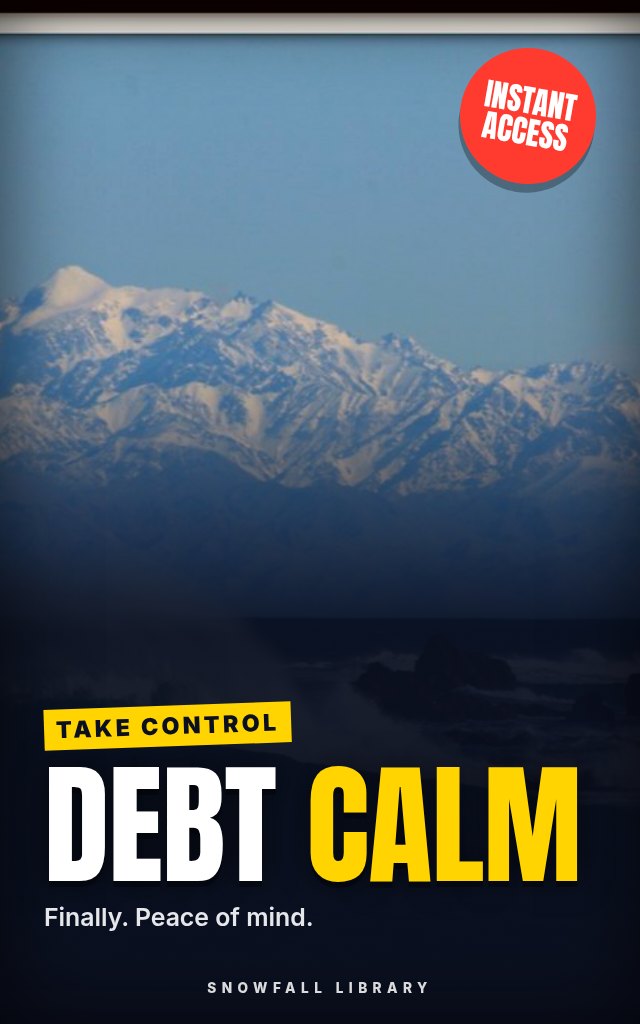
Debt Calm: A Realistic Plan to Conquer Debt & Build a Life You Love
A realistic plan to conquer debt and build a life you love
About this guide
- Individuals and families juggling credit cards, student loans, and car payments.
- People who’ve tried and failed with rigid budgets, or feel paralyzed by the amount they owe.
- Anyone with a variable income needing a flexible approach to financial freedom.
- Those ready to break the debt cycle and create a secure future.
- A deeper understanding of the habits that lead to debt.
Product details
| Publisher | Snowfall Library (founded by Max) |
|---|---|
| Format | PDF Guide |
| Length | 20+ pages |
| Language | English |
| Delivery | Instant download after payment |
| Reads on | Phone, tablet, Kindle app or computer |
| Category | Personal Finance |
Better together
Add these to your order and save 35% on each one.
Book description
Feeling stuck in a cycle of debt, despite your best efforts? It’s not always about stricter budgeting, but finding a plan that actually fits your life.
Who it's for
- Individuals and families juggling credit cards, student loans, and car payments.
- People who’ve tried and failed with rigid budgets, or feel paralyzed by the amount they owe.
- Anyone with a variable income needing a flexible approach to financial freedom.
- Those ready to break the debt cycle and create a secure future.
What you'll walk away with
- A deeper understanding of the habits that lead to debt.
- A practical ‘Debt Destroyer System’ designed for your income and lifestyle, focused on small, achievable wins.
- Strategies for building a financial cushion to handle unexpected expenses without derailing your progress.
- The confidence to move from debt payoff to building lasting wealth.
- Tools for managing financial stress and staying motivated long after you’re debt-free.
What's inside
- Part 1: Understanding Your Debt & Mindset: Laying the Foundation
- Part 2: The Debt Destroyer System: Taking Control
- Part 3: Building a Life After Debt: Securing Your Future
- Advanced Strategies & Maintaining Momentum
Look inside
Part 1: Understanding Your Debt & Mindset: Laying the Foundation
The Debt Cycle: Why We Get Stuck
Let’s be real. You’re here because debt feels…heavy. It’s not just the numbers ticking away on statements, it’s the feeling of being stuck, of plans constantly being put on hold, of a future that feels less secure. Maybe you’re juggling credit card bills after an unexpected car repair. Maybe student loans are delaying your dream of buying a home. Or perhaps a combination of things has left you feeling overwhelmed and unsure where to even begin. You’re not alone. Many of us find ourselves in this position, and understanding why is the first step towards breaking free. It's not a personal failing; it’s a system designed, often unintentionally, to keep us in a cycle.
The Allure of Instant Gratification
We’re wired to want things now. Our brains are naturally drawn to immediate rewards, a holdover from when survival depended on seizing opportunities quickly. This tendency is brilliantly exploited in modern marketing. Think about it: “Buy now, pay later” (BNPL) services, readily available credit, and constant advertising all feed this desire for instant gratification.
Pro tip: Recognize when marketing is appealing to your desire for instant gratification. Ask yourself: Do I really need this right now, or am I just reacting to a clever ad?
It’s easy to fall into the trap. A new phone on a payment plan seems manageable at $50 a month. A quick weekend getaway financed with a credit card feels like a well-deserved break. But those small amounts add up quickly. Let’s look at an example:
Scenario: Sarah wants a new laptop for freelance work.
- Option 1: Cash Purchase: $1200. Requires saving, but no ongoing interest.
- Option 2: BNPL: $250/month for 6 months. Seems easier, but includes $150 in interest, bringing the total cost to $1350.
- Option 3: Credit Card: Minimum payments of $30/month with a 20% APR. Could take years to pay off, with a total cost exceeding $2000.
While the BNPL option appears less daunting than the credit card, it’s still more expensive than saving up. The credit card is the most costly, and the prolonged debt keeps Sarah from achieving other financial goals.
The Marketing Machine & Lifestyle Creep
Beyond individual impulses, marketing actively shapes our perceptions of what we should want. We're bombarded with images of ideal lifestyles, vacations, fancy cars, perfectly decorated homes, and subtly encouraged to believe that happiness is tied to acquiring these things. This creates a sense of “keeping up with the Joneses,” leading to lifestyle creep.
Lifestyle creep is the tendency to increase your spending as your income rises. A small raise might seem like a reason to upgrade your car, dine out more often, or buy more expensive clothes. While enjoying the fruits of your labor is fine, unchecked lifestyle creep can quickly erode your progress towards financial freedom.
Example: Mark gets a $3,000 raise. He immediately upgrades his car payment from $300/month to $500/month. While he feels good about the new car, he's effectively spending most of his raise on a depreciating asset, leaving little room for debt payoff or savings.
Action step: Track your spending for one month. Categorize each expense and identify areas where you're spending money on things that don't align with your values or long-term goals.
Lack of Financial Education
Many of us simply weren’t taught about personal finance in school or at home. We enter adulthood without a basic understanding of budgeting, credit, investing, or debt management. This lack of knowledge makes us vulnerable to predatory lending practices and poor financial decisions.
Warning: Payday loans are a particularly dangerous trap. They offer a quick fix for immediate needs, but come with exorbitant interest rates (often exceeding 400% APR). Even a small loan can quickly spiral out of control.
Here's a breakdown of the costs associated with a $500 payday loan:
| Loan Term | APR ...
Readers also browse
Leave Early and Get Your Deposit Back
Check Texts, Emails, Jobs and Stores Before You Pay
Identify, Cancel and Recover Payments You Didn't Expect
A 90-Day Plan to Stop Living Paycheck to Paycheck