
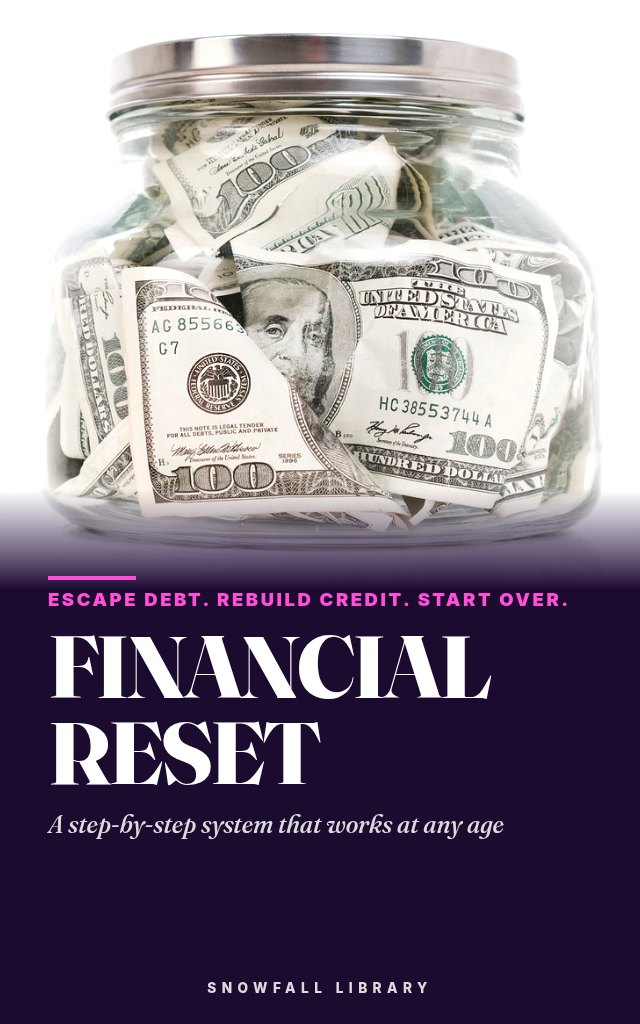
Financial Reset: A 90-Day Plan to Stop Living Paycheck to Paycheck
Understand why the money runs out before payday, then follow a 90-day plan to change the pattern.
About this guide
- Working adults who regularly run out of money before the next paycheck
- People who've tried budgeting apps without seeing the change stick
- Anyone carrying money stress who wants a clearer sense of control
- Readers starting with no savings who'd like to begin building some
- An honest understanding of the paycheck-to-paycheck cycle and what keeps you in it
Product details
| Publisher | Snowfall Library (founded by Max) |
|---|---|
| Format | PDF Guide |
| Length | 20+ pages |
| Language | English |
| Delivery | Instant download after payment |
| Reads on | Phone, tablet, Kindle app or computer |
| Category | Personal Finance |
Better together
Add these to your order and save 35% on each one.
Book description
Payday lands on a Friday. By the following Thursday you're moving money between accounts and doing sums in your head at the checkout. You've tried the budgeting apps and the tips. They worked for a week or two, then real life happened.
Financial Reset begins with the question most money advice skips: why you're stuck. Once the cycle makes sense, a 90-day plan walks you through breaking it, covering budgeting, saving and getting on top of debt, even if you're starting from scratch. From there the guide builds momentum with more advanced strategies, then sets up long-term systems and a steadier money mindset so the progress outlasts the first three months.
Who it's for
- Working adults who regularly run out of money before the next paycheck
- People who've tried budgeting apps without seeing the change stick
- Anyone carrying money stress who wants a clearer sense of control
- Readers starting with no savings who'd like to begin building some
What you'll walk away with
- An honest understanding of the paycheck-to-paycheck cycle and what keeps you in it
- A 90-day reset plan with a budget built to survive a real month
- A clearer way to tackle debt and start saving
- Advanced strategies for building momentum once the basics hold
- Long-term systems and mindset habits for keeping some breathing room
No lectures and no shame. Just a plan you can start on your next payday.
What's inside
- Part 1: Understanding the Cycle, Why You're Stuck
- Part 2: The Financial Reset, A 90-Day Plan
- Part 3: Building Momentum, Advanced Strategies
- Part 4: Maintaining Financial Freedom, Long-Term Systems & Mindset
Look inside
Part 1: Understanding the Cycle, Why You're Stuck
The Paycheck-to-Paycheck Trap: Beyond the Budget
Let’s be real. You’re reading this because, despite your best efforts, you’re likely staring down another week or two before your next paycheck, wondering where all the money went. Maybe you meticulously track expenses in an app, maybe you try the envelope system, maybe you just feel the anxiety building as the days tick by. You’re not alone. Millions of people earning a decent income, between $40,000 and $80,000 a year, are stuck in this frustrating cycle. It’s not about being bad with money. It’s about a system that's working against you, and a deeper understanding of why we consistently make choices that leave us feeling financially vulnerable. This isn’t a budgeting book, not in the traditional sense. We’re going to move beyond simply tracking where your money goes and focus on why it goes there, and how to build a lasting escape.
Why Budgets Often Fail
The problem isn’t that budgeting doesn’t work. The problem is that most budgeting advice treats the symptoms of financial stress, not the cause. It focuses on restricting spending without addressing the underlying pressures and psychological tendencies that drive it. You can create a detailed budget, but if you haven’t addressed the “why” behind your spending, it’s like trying to bail out a sinking boat with a teaspoon.
Think about it: a budget is a plan based on future income to cover past expenses. If your income is predictable, great. But life throws curveballs. Unexpected car repairs, medical bills, a family emergency, these things derail even the most carefully crafted budget. And when they do, the cycle starts again: more stress, more anxiety, and a feeling of helplessness.
Assessing Your Situation: The Paycheck-to-Paycheck Cycle Severity Quiz
Before we dive into solutions, let’s honestly assess where you stand. This isn’t about judgment; it’s about understanding the severity of the cycle you’re in. Answer these questions honestly, scoring each as follows:
- Always (3 points)
- Often (2 points)
- Rarely (1 point)
- Never (0 points)
- I worry about having enough money to cover unexpected expenses.
- I frequently use credit cards to cover everyday purchases.
- I feel stressed or anxious when thinking about my finances.
- I have little to no savings beyond what’s needed for immediate bills.
- I find it difficult to say "no" to spending requests from family or friends.
- I often make impulse purchases I later regret.
- I avoid looking at my bank account balance.
- I feel like I’m constantly working just to pay the bills.
Scoring:
- 0-8 points: You have a solid financial foundation. Continue practicing good habits.
- 9-16 points: You're showing early signs of the paycheck-to-paycheck cycle. It's time to take action.
- 17-24 points: You’re deeply entrenched in the cycle. A significant reset is needed.
Calculating Your Days of Cash on Hand
A critical first step is understanding just how vulnerable you are. Let’s calculate your “Days of Cash on Hand” (DCOH). This is a simple but powerful metric.
Here’s how:
- Calculate your total monthly essential expenses. This includes rent/mortgage, utilities, groceries, transportation, minimum debt payments, and childcare. Exclude non-essential spending like entertainment, dining out, and subscriptions for now.
- Calculate your total readily available cash. This is the money in your checking account and any high-yield savings accounts. Don’t include money tied up in investments or retirement accounts.
- Divide your readily available cash by your total monthly essential expenses.
Example:
- Monthly essential expenses: $3,000
- Readily available cash: $500
DCOH = $500 / $3,000 = 0.167
This means you have less than 6 days of essential expenses covered. Anything below 30 days is a significant red flag. Above 90 days is a comfortable safety net.
Action step: Calculate your DCOH right now. This number is your baseline, and we’ll work to improve it significantly.
The ...
Readers also browse

Check Texts, Emails, Jobs and Stores Before You Pay

Identify, Cancel and Recover Payments You Didn't Expect

Start a Business With No Idea and No Money

A 30-Day Reset for Phone Habits and Focus