
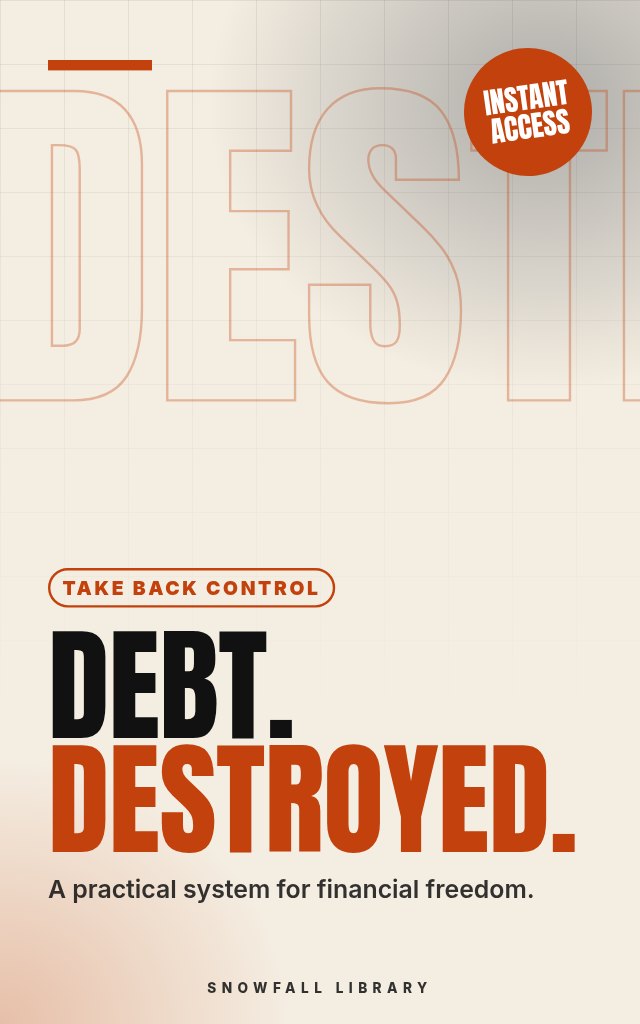
Debt Destroyer: A Practical System to Eliminate Debt, Build Wealth, and Live Free
A Practical System to Eliminate Debt, Build Wealth, and Live Securely
About this guide
- People juggling credit card debt, student loans, and unexpected expenses.
- Those frustrated with generic financial advice that doesn’t fit their life.
- Anyone wanting a simple, practical system to become debt-free.
- Individuals who want to build lasting financial stability *after* getting out of debt.
- A flexible debt payoff strategy tailored to your income and goals.
Product details
| Publisher | Snowfall Library (founded by Max) |
|---|---|
| Format | PDF Guide |
| Length | 20+ pages |
| Language | English |
| Delivery | Instant download after payment |
| Reads on | Phone, tablet, Kindle app or computer |
| Category | Personal Finance |
Better together
Add these to your order and save 35% on each one.
Book description
Feeling trapped by debt? It’s a common struggle, but you don't have to stay stuck. This guide offers a clear path toward regaining control of your finances and building a future where money isn’t a constant worry.
Who it's for
- People juggling credit card debt, student loans, and unexpected expenses.
- Those frustrated with generic financial advice that doesn’t fit their life.
- Anyone wanting a simple, practical system to become debt-free.
- Individuals who want to build lasting financial stability after getting out of debt.
What you'll walk away with
- A flexible debt payoff strategy tailored to your income and goals.
- Budgeting techniques that make prioritizing debt reduction easier.
- Confidence in communicating with creditors and negotiating better terms.
- Strategies for building an emergency fund and starting to invest.
- A renewed sense of control and a plan for long-term financial well-being.
What's inside
- Part 1: Understanding Your Debt: The Brutal Truth
- Part 2: The Debt Destroyer System: A Flexible Framework for Success
- Part 3: Budgeting for Debt Payoff: Taking Control of Your Cash Flow
- Part 4: Negotiation & Creditor Communication: Becoming a Savvy Debtor
- Part 5: Building Financial Resilience: Setting the Stage for Long-Term Wealth
- Part 6: Advanced Strategies & Maintaining Momentum
Look inside
Part 1: Understanding Your Debt: The Brutal Truth
The Weight of It All
Let’s be honest. You’re likely not picking up this book because you enjoy managing money. You’re probably feeling stressed, overwhelmed, and maybe even a little ashamed. Maybe you avoid checking your bank account. Perhaps you dread mail delivery. Or maybe you’re just exhausted from constantly working to stay afloat, feeling like you’re running a financial marathon with no finish line in sight. You’re living paycheck to paycheck, and the thought of an unexpected expense sends a wave of panic through you. This isn’t about a lack of intelligence or willpower. It’s about a system, both financial and internal, that has gotten out of control. The first step toward change isn’t a spreadsheet; it’s acknowledging how you feel about your situation.
Why Feelings Matter (And Why We Often Ignore Them)
We’re often told to be “rational” with our finances, to focus on numbers and logic. But debt isn't just a mathematical problem. It’s deeply emotional. Shame, fear, anxiety, and even anger can paralyze us, making it impossible to take the practical steps we know we should take. These feelings aren’t weaknesses; they’re signals. They’re telling you that something is wrong, that your current situation is causing you distress. Ignoring these feelings doesn’t make them disappear. It just buries them, where they continue to sabotage your efforts.
Think about it: how often do you make impulsive purchases when you’re feeling down? Or avoid looking at your bills when you're stressed? These are emotional reactions, and they’re often the biggest obstacles to financial progress.
Identifying Your Debt-Related Emotions
Before we can tackle the practical side of debt, we need to understand the emotional baggage you’re carrying. Let’s pinpoint those feelings.
Action step: Take five minutes to answer these questions honestly. Don't overthink it; just write down the first thing that comes to mind.
- What is the first thought that pops into your head when you think about your debt?
- What physical sensations do you experience when you think about your finances (tightness in your chest, stomach ache, headache, etc.)?
- What emotions do you typically feel when you look at your credit card statement or bank balance? (Check all that apply: Shame, Fear, Anxiety, Anger, Guilt, Hopelessness, Frustration, Sadness)
- How does your debt impact your relationships with others? (Do you avoid talking about money with your partner? Do you feel judged by friends or family?)
- What do you believe about yourself as a result of being in debt? (e.g., "I'm irresponsible," "I'm a failure," "I'll never get out of this.")
The Journaling Exercise: Processing Your Emotions
Now that you’ve identified your emotions, let’s start processing them. Journaling is a powerful tool for emotional release and self-awareness. It doesn't have to be perfect prose; it just needs to be honest.
Example: Let's say you answered the questions above and identified shame and anxiety as your primary emotions. Here's how a journaling session might look:
Date: October 26, 2023
Topic: Debt & Shame
"I feel so ashamed of how much debt I have. It feels like I've failed at something fundamental. I compare myself to friends who seem to have it all together, and I feel like I'm falling behind. The anxiety is constant, like a knot in my stomach. I worry about not being able to provide for my family, about losing everything. It’s exhausting pretending everything is okay when it’s not."
Then, ask yourself these probing questions:
What specifically am I ashamed of? Is it the amount of debt, the way I accumulated it, or something else? What is the worst-case scenario I’m imagining? Is it realistic? What is one small step I can take today to feel more in control?
Action step: Commit to journaling for 10-15 minutes, three times a week, for the next month. Focus on your emotions related to debt. Be honest, be vulnerable, and don’t ...
Readers also browse

Check Texts, Emails, Jobs and Stores Before You Pay

Identify, Cancel and Recover Payments You Didn't Expect

Start a Business With No Idea and No Money

A 30-Day Reset for Phone Habits and Focus