
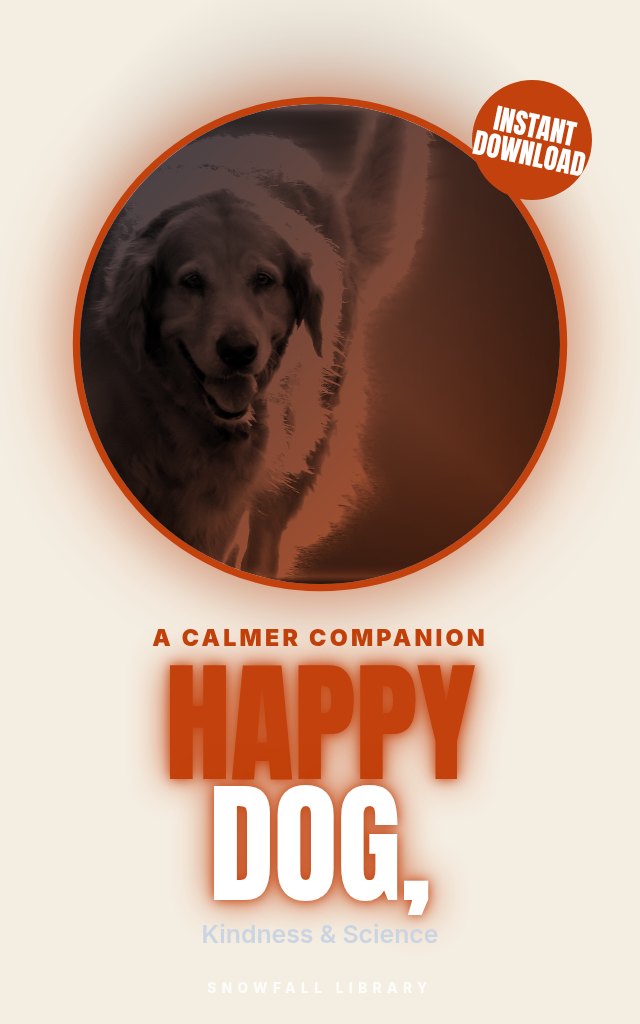
Decoding Your Dog: Understanding and Resolving Problem Behaviors with Kindness and Science
Understanding & Solving Problem Behaviors with Kindness
About this guide
- Owners frustrated with barking, chewing, or reactivity on walks.
- New dog parents wanting to start off on the right paw.
- Anyone who believes in a positive, science-based approach to training.
- People who want to address the emotional roots of their dog's behavior.
- Practical methods for managing excessive barking, recognizing normal vocalization from problem behavior.
Product details
| Publisher | Snowfall Library (founded by Max) |
|---|---|
| Format | PDF Guide |
| Length | 20+ pages |
| Language | English |
| Delivery | Instant download after payment |
| Reads on | Phone, tablet, Kindle app or computer |
| Category | Pets |
Better together
Add these to your order and save 35% on each one.
Book description
Does your dog’s behavior leave you feeling confused or stressed? You’re not alone. Many owners struggle with unwanted behaviors and wish they could truly understand what their dog is trying to communicate.
Who it’s for
- Owners frustrated with barking, chewing, or reactivity on walks.
- New dog parents wanting to start off on the right paw.
- Anyone who believes in a positive, science-based approach to training.
- People who want to address the emotional roots of their dog's behavior.
What you’ll walk away with
- Practical methods for managing excessive barking, recognizing normal vocalization from problem behavior.
- Strategies to redirect destructive chewing and satisfy your dog's natural urges.
- A plan to help your dog stay calm on leash, making walks more enjoyable for both of you.
- Techniques for easing separation anxiety and creating a secure environment.
- Insight into resource guarding and how to prevent or safely address it.
What's inside
- Foundations: Understanding Your Dog's World
- Decoding the Bark: Understanding and Managing Excessive Vocalization
- Chewing and Destructive Behavior: Redirecting Natural Instincts
- Reactivity on Leash: From Frustration to Calm Walks
- Separation Anxiety: Helping Your Dog Cope with Alone Time
- Resource Guarding: Preventing and Managing Possessiveness
- Digging: Satisfying Instincts and Protecting Your Yard
Look inside
Foundations: Understanding Your Dog's World
Foundations: Understanding Your Dog's World: The Canine Communication Code
You brought a dog into your life hoping for companionship, joy, and maybe a walking buddy. Instead, you’re facing challenges. Maybe it’s constant barking, a chewed-up shoe, or a dog who seems anxious and overwhelmed. It’s frustrating when you feel like you’re not understanding what your dog is trying to tell you. This section will equip you with the skills to read your dog, moving beyond simply noticing what they’re doing to understanding why. Recognizing their subtle cues will dramatically improve your relationship and allow you to address behavioral issues with empathy and effectiveness. Dogs don’t speak our language, so we need to become fluent in theirs.
Why Body Language Matters
Dogs communicate primarily through body language. Vocalizations are important, but the vast majority of their messaging is nonverbal. Misinterpreting these signals can lead to misunderstandings, escalating stress, and even reactive behavior. Imagine trying to have a conversation with someone while wearing noise-canceling headphones and refusing to look at their facial expressions, frustrating, right? That's what it's like for your dog when we ignore their body language. Understanding these signals allows you to proactively respond to your dog's needs, prevent problems before they arise, and build a stronger, more trusting connection.
Decoding the Relaxed Dog
Before we dive into stress signals, let’s establish a baseline. What does a relaxed dog look like? This is crucial because it’s easier to recognize when something shifts from this neutral state.
- Body Posture: Loose and fluid, weight evenly distributed.
- Tail: Held in a neutral position or gently wagging. A relaxed wag is often broad and involves the whole body.
- Ears: Held in a natural position, not pinned back or rigidly forward.
- Mouth: Slightly open, possibly with a relaxed “smile” (a slight upturn of the lips).
- Eyes: Soft and blinking regularly.
- Facial Muscles: Relaxed, no tension around the muzzle or brow.
Action step: Spend 15 minutes simply observing your dog when they are resting or engaging in a calm activity. Note their body posture, tail position, ear position, and facial expressions. This will help you recognize their “default” relaxed state.
Recognizing Stress Signals: The Early Warning System
Dogs rarely escalate to biting or aggression without first displaying a series of subtle stress signals. These are their attempts to communicate discomfort and ask for space. Learning to recognize these signals is like having an early warning system, allowing you to intervene before a situation escalates.
Here are some common stress signals:
- Whale Eye: Showing the whites of their eyes (sclera), often a sign of discomfort.
- Lip Licking: Frequent lip licking, even when not eating.
- Yawning: Yawning when not tired, often a displacement behavior indicating stress.
- Turning Away: Avoiding direct eye contact or turning their head/body away.
- Tucked Tail: Tail held low or tucked between their legs.
- Panting: Panting when not hot or exerted.
- Freezing: Becoming completely still and tense.
- Ears Pinned Back: Ears flattened against their head.
- Raised Hackles: Hair standing up on their back (not always a sign of aggression, can also indicate arousal or uncertainty).
- Slow Movement: Moving slowly and deliberately, as if trying to be unnoticeable.
Example: You’re introducing your dog to a new person. Your dog begins to lick their lips repeatedly and looks away. This isn't a sign they want a treat; it's a sign they’re feeling uncomfortable with the approach. You should immediately slow down the introduction or create more space.
Pro tip: Don't focus on individual signals in isolation. Consider the cluster of signals your dog is displaying. A single yawn might not mean much, but a yawn combined with whale eye and lip licking is a clear indication of stress.
Calming Signals: A Dog's Attempt to Self-Sooth and De-escalate
Calming signals are behaviors dogs use to communicate that ...
Readers also browse

Understanding and Healing Your Dog's Anxiety

Stop reacting, start understanding. Build a loving relationship with your toddler by meeting their needs with calm and empathy.

Reactive Dogs

A Toddler Sleep Plan That Fits Your Family