
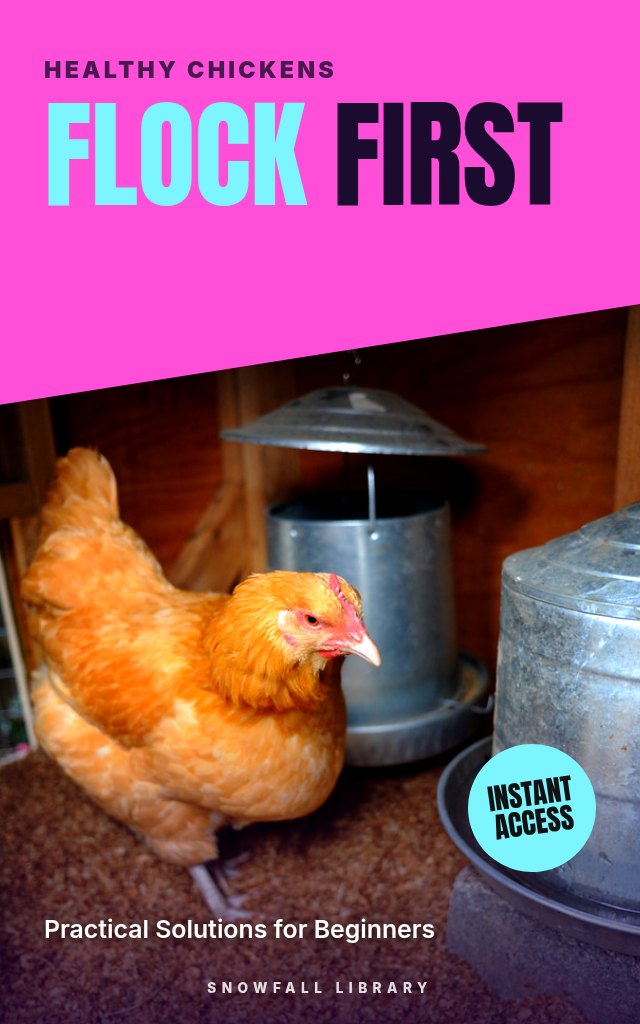
Flock First: Backyard Chickens
Raising a Healthy Flock and Consistent Egg Supply
About this guide
- Beginners ready to start, but wanting to avoid common mistakes.
- Homeowners in the suburbs or country seeking a sustainable lifestyle.
- Families hoping to connect with where their food comes from.
- Anyone wanting a low-impact hobby that provides fresh, healthy eggs.
- A clear plan for coop placement, respecting your neighbors and local rules.
Product details
| Publisher | Snowfall Library (founded by Max) |
|---|---|
| Format | PDF Guide |
| Length | 20+ pages |
| Language | English |
| Delivery | Instant download after payment |
| Reads on | Phone, tablet, Kindle app or computer |
| Category | Gardening & Homesteading |
Better together
Add these to your order and save 35% on each one.
Book description
Is keeping chickens feeling more daunting than delightful? You’re not alone. This guide focuses on preventing problems before they start, letting you enjoy a rewarding hobby and a basket full of fresh eggs.
Who it's for
- Beginners ready to start, but wanting to avoid common mistakes.
- Homeowners in the suburbs or country seeking a sustainable lifestyle.
- Families hoping to connect with where their food comes from.
- Anyone wanting a low-impact hobby that provides fresh, healthy eggs.
What you’ll walk away with
- A clear plan for coop placement, respecting your neighbors and local rules.
- Daily checklists that make flock health simple and manageable.
- The ability to quickly spot and address common chicken ailments.
- Smart strategies for maximizing egg production year-round.
- Confidence in handling unexpected challenges, from predators to coop upkeep.
What's inside
- Part 1: Planning Your Flock, Laying the Foundation for Success
- Part 2: The Coop & Run, Building a Safe & Functional Habitat
- Part 3: Bringing Your Chickens Home, From Chicks to Pullets
- Part 4: Daily Care & Routine, Maintaining a Healthy Flock
- Part 5: Health Issues & Troubleshooting, Addressing Common Problems
- Part 6: Egg Production & Beyond, Maximizing Your Harvest
- Part 7: Problem Solver, What To Do When…
Look inside
Part 1: Planning Your Flock, Laying the Foundation for Success
Is Backyard Chicken Keeping Right for You? A Realistic Assessment
Let's be honest. You're here because you're intrigued by the idea of fresh eggs, a bit of self-sufficiency, or maybe just the charm of having chickens pecking around the yard. That’s perfectly valid. But before you picture idyllic scenes of fluffy birds and bountiful harvests, let’s ground ourselves in reality. Chicken keeping isn’t always picturesque. It requires a genuine commitment of time, money, and effort. This section will help you honestly assess if you’re prepared for that commitment.
The Time Commitment: More Than Just Collecting Eggs
People often underestimate the daily and weekly time demands. It’s not just about gathering eggs. Think about it like a small, feathered pet, multiplied by the number of birds you plan to keep.
- Daily: 15-30 minutes per bird, minimum. This covers letting them out (if free-ranging), checking food and water, a quick health scan, and collecting eggs. Yes, even in winter.
- Weekly: 1-2 hours for a thorough coop cleaning. This is non-negotiable for health and hygiene.
- Monthly: Deeper cleaning tasks like run refreshing, equipment maintenance, and potential pest control.
- Unexpected: Time for dealing with illnesses, injuries, or predator issues. These will happen.
Action step: Take a week and honestly track how you spend your time. Then, block out those 15-30 minutes every day, the hour or two weekly, and build in buffer time for the inevitable surprises. If that feels impossible, reconsider the number of birds you’re planning to get.
Consider your lifestyle. Do you travel frequently? Have a demanding job? A busy family? Someone reliable must be available to care for the chickens when you're away. Boarding chickens isn’t always an option, and relying on a neighbor can quickly become a burden.
The Financial Investment: It Adds Up
The initial setup cost is just the beginning. Forget romantic notions of “free” eggs. Chickens cost money. Let's break down the expenses:
Initial Costs (Estimate for 3-4 chickens):
| Item | Cost (USD) | Notes |
|---|---|---|
| Coop & Run | $300 - $800+ | Varies drastically based on build vs. buy |
| Chicks/Pullets | $15 - $40/bird | Breed and age affect price |
| Brooder Supplies | $50 - $100 | Heat lamp, bedding, chick feeder/waterer |
| Initial Feed | $40 - $60 | Chick starter feed |
| First Aid Kit | $20 - $30 | Essential for minor injuries |
| Total (Approximate) | $425 - $1030+ |
Ongoing Annual Costs (Estimate for 3-4 chickens):
| Item | Cost (USD) | Notes |
|---|---|---|
| Feed | $150 - $300 | Varies by feed type and consumption |
| Bedding | $50 - $100 | Straw, wood shavings, etc. |
| Supplements/Grit | $20 - $40 | Oyster shell, grit for digestion |
| Healthcare (Routine) | $30 - $50 | Worming, mite treatment |
| Replacement Birds | $20 - $80+ | Chickens don't live forever. Expect losses. |
| Total (Approximate) | $270 - $570+ |
Pro tip: Factor in the cost of electricity for heat lamps in winter (if needed) and potential repairs to the coop or run. Don't forget the cost of replacing equipment like feeders and waterers.
Example: Let's say you spend $600 initially and $400 annually. Over five years, you've invested $2600. That's a lot of eggs, but it's still a significant expense. Calculate how many eggs you’d need to collect to offset that cost.
Space Requirements: It’s Not Just About the Coop
Chickens need space to roam, forage, and exhibit natural behaviors. Cramped conditions lead to stress, aggression, and health problems.
- Coop: Minimum 4 square feet per bird inside the coop. More is always better. * Run: Minimum 8-10 square feet per bird in the attached run. * Free-Range: If you plan to let your chickens free-range, you’ll need a securely ...
Readers also browse
Fix It Yourself & Save, A Practical Guide for Homeowners

Vehicle Care

Cheap, Healthy Weekly Meal Plans for Busy Households

Make Your Home Feel Cozy With Light, Texture and Scent