
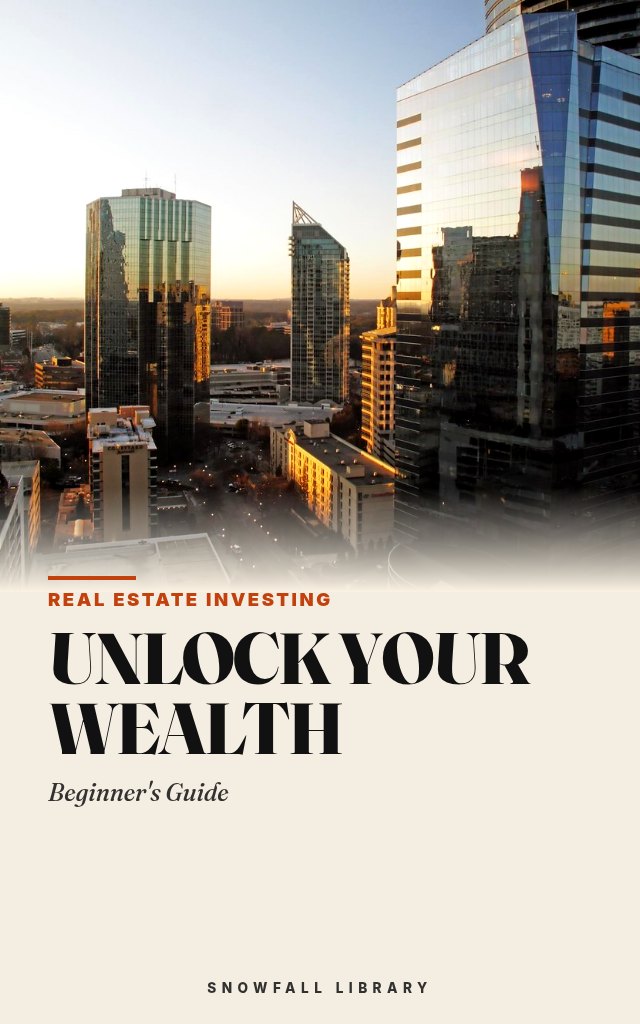
Build Real Estate Wealth: Rentals, Flips and REITs for Beginners With Limited Funds
Three ways into property, from owning a rental to buying shares in a trust, laid out for first-time investors.
About this guide
- First-time investors with little or no experience
- People with limited capital who assume property is out of reach
- Readers weighing rental income against flips or a more passive approach
- A working vocabulary and investment goals matched to your risk tolerance
- A process for finding, financing and managing a rental, with financial modeling templates
Product details
| Publisher | Snowfall Library (founded by Max) |
|---|---|
| Format | PDF Guide |
| Length | 20+ pages |
| Language | English |
| Delivery | Instant download after payment |
| Reads on | Phone, tablet, Kindle app or computer |
| Category | Personal Finance |
Better together
Add these to your order and save 35% on each one.
Book description
You've read the Reddit threads. One person bought a duplex young, another lost their savings on a flip, and a third says just buy REITs and stop worrying. You're left with more questions than when you started.
Build Real Estate Wealth sorts out the three main routes into property so you can see which fits your money, time and nerves. It begins with core terms, goal setting and an honest look at your risk tolerance. Then it takes each strategy in turn: rental properties (finding, financing, tenant screening, cash flow), house flipping (spotting undervalued homes, estimating renovation costs, running the project) and REITs, the hands-off way to own a slice of real estate without a set of keys.
Who it's for
- First-time investors with little or no experience
- People with limited capital who assume property is out of reach
- Readers weighing rental income against flips or a more passive approach
What you'll walk away with
- A working vocabulary and investment goals matched to your risk tolerance
- A process for finding, financing and managing a rental, with financial modeling templates
- The basics of a flip, from buying right to costing the renovation and avoiding common profit leaks
- A clear way to compare and choose REITs
- Principles for diversification, tax planning and protecting what you build over time
Property carries real risk. This helps you understand it before you commit.
What's inside
- Part 1: Foundations of Real Estate Investing
- Part 2: Rental Properties, A Deep Dive
- Part 3: Flipping Houses, From Acquisition to Profit
- Part 4: REITs, The Passive Approach
- Part 5: Risk Management and Long-Term Wealth Building
Look inside
Part 1: Foundations of Real Estate Investing
Real Estate Investing: Why Now? And Is It Right For You?
Let’s be honest. You’re likely reading this because you feel stuck. Maybe you’re tired of trading time for money at a job that doesn’t excite you. Perhaps you’re worried about the future and want to build something solid for yourself and your family. Or maybe you’re just looking for a way to make your money work for you, instead of the other way around. You’re not alone. Many people are searching for financial freedom and a path to building lasting wealth. Real estate investing can be that path, but it’s not a magic bullet. This section will lay the groundwork, understanding if it fits your life and how to start thinking like an investor.
The Current Landscape: Opportunity Amidst Uncertainty
The real estate market feels…complicated right now, doesn’t it? We’ve seen rapid price increases followed by talk of corrections, rising interest rates, and economic uncertainty. It’s easy to get paralyzed by fear or feel like it’s “not the right time.” But historically, waiting for the “perfect” time is a recipe for missing out.
Real estate is cyclical. There will always be ups and downs. The key is to understand where we are in the cycle and position yourself accordingly. Right now, while challenges exist, opportunities are still abundant, especially for those willing to do their homework and be a little creative.
Consider this: even with recent rate increases, historically, real estate has consistently outperformed other asset classes over the long term. Plus, unlike stocks, real estate provides a tangible asset and the potential for consistent cash flow.
Action step: Spend 30 minutes researching local market trends in your area. Websites like Zillow, Realtor.com, and Redfin offer basic data. Note average home prices, days on market, and rental rates. This is your baseline.
Why Real Estate? The Benefits Explained
Let’s break down why real estate investing is appealing, beyond just the potential for profit:
- Cash Flow: Rental properties can generate consistent monthly income, supplementing your current earnings.
- Appreciation: Properties generally increase in value over time, building your net worth.
- Tax Benefits: Real estate investors can deduct expenses like mortgage interest, property taxes, insurance, and depreciation, lowering their tax liability.
- Inflation Hedge: Real estate tends to hold its value during inflationary periods, as rents and property values often rise with inflation.
- Control: Unlike many investments, you have a degree of control over your real estate investments. You can improve properties, negotiate rents, and actively manage your portfolio.
Example: Sarah, a teacher, purchased a small two-bedroom condo for $200,000. After renovations costing $10,000, she rents it out for $1,500 per month. After expenses (mortgage, property taxes, insurance, property management), she nets $500 per month in cash flow. Plus, the property has appreciated by $20,000 in the past two years.
Is Real Estate Investing Right For You? A Realistic Assessment
Not everyone is cut out for real estate investing. It requires time, effort, and a certain level of risk tolerance. Before jumping in, let's honestly assess if it aligns with your personality and lifestyle.
Here's a breakdown of key considerations:
- Time Commitment: Are you willing to dedicate time to researching properties, analyzing deals, managing tenants (or hiring a property manager), and handling repairs? Even “passive” investments like REITs require some ongoing monitoring.
- Financial Resources: While you don’t need a fortune to start, you will need some capital for a down payment, closing costs, and potential repairs. We’ll cover creative financing options later, but be realistic about your current financial situation.
- Risk Tolerance: Real estate investments come with risks, vacancies, property damage, unexpected repairs, and market fluctuations. Are you comfortable with these uncertainties?
- Skills & Knowledge: Do you have basic financial literacy? Are you willing to learn about property valuation, financing, and property management?
Self-Assessment Quiz: Are You Ready to ...
Readers also browse

Check Texts, Emails, Jobs and Stores Before You Pay

Identify, Cancel and Recover Payments You Didn't Expect

Start a Business With No Idea and No Money

A 30-Day Reset for Phone Habits and Focus