
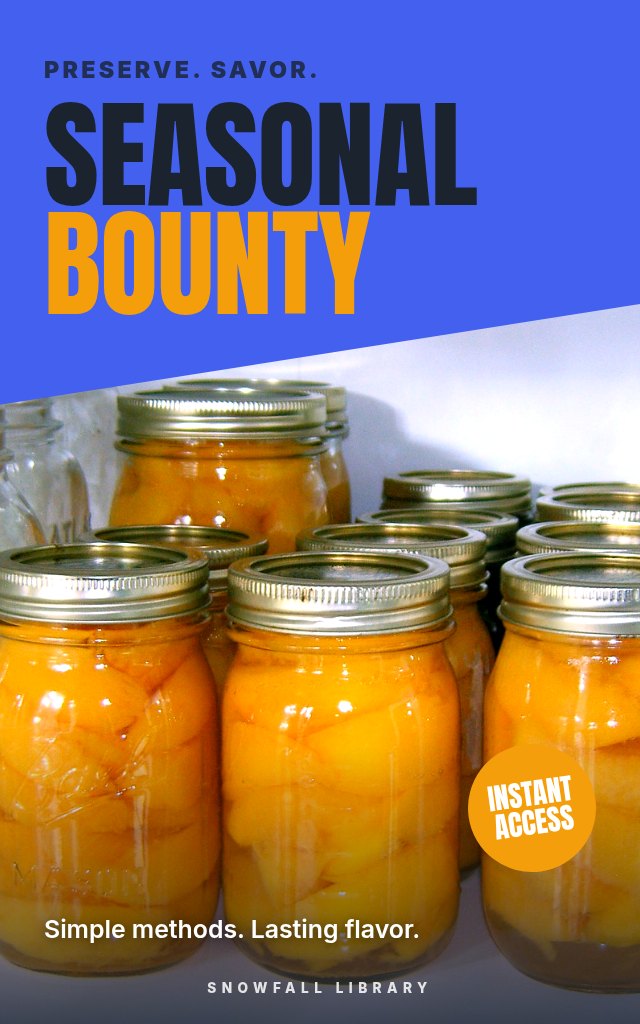
Seasonal Bounty: Preserve & Savor
Small-Batch Food Preservation for Modern Life
About this guide
- Home cooks eager to reduce waste and eat seasonally.
- Gardeners wanting to enjoy the fruits (and vegetables) of their labor year-round.
- Anyone seeking a connection to real food and traditional skills, simplified for today.
- People who value both delicious food and a lighter footprint on the planet.
- Confidence in safe preserving techniques, even if you’re a beginner.
Product details
| Publisher | Snowfall Library (founded by Max) |
|---|---|
| Format | PDF Guide |
| Length | 20+ pages |
| Language | English |
| Delivery | Instant download after payment |
| Reads on | Phone, tablet, Kindle app or computer |
| Category | Gardening & Homesteading |
Better together
Add these to your order and save 35% on each one.
Book description
Do you wish you could enjoy summer’s tomatoes all winter? Are you tired of watching fresh food spoil before you can use it?
Who it's for
- Home cooks eager to reduce waste and eat seasonally.
- Gardeners wanting to enjoy the fruits (and vegetables) of their labor year-round.
- Anyone seeking a connection to real food and traditional skills, simplified for today.
- People who value both delicious food and a lighter footprint on the planet.
What you’ll gain
- Confidence in safe preserving techniques, even if you’re a beginner.
- Skills to dehydrate fruits, vegetables, and herbs for healthy snacks and flavorful ingredients.
- Easy freezer methods that save space and maintain quality.
- A year-round guide to preserving the best of each season, with minimal equipment.
- Solutions to common preservation problems, plus ideas for customizing recipes to your taste.
What's inside
- Part 1: Foundations of Safe Preservation
- Part 2: Core Techniques, Mastering the Methods
- Part 3: Seasonal Preservation, A Year-Round Guide
- Part 4: Beyond the Basics, Troubleshooting, Customization & Growth
Look inside
Part 1: Foundations of Safe Preservation
The Science of Spoilage: Understanding What Makes Food Go Bad
Let’s be real: you’re here because you want to enjoy the fruits (and vegetables!) of your labor, whether that’s a gorgeous garden harvest, a trip to the farmer’s market, or a bulk purchase of seasonal produce. You want to avoid tossing perfectly good food in the trash, and you’re ready to take control of what you eat. But maybe you remember your grandmother’s complicated canning process and feel a little intimidated. Or maybe you’ve heard scary stories about botulism and aren’t sure where to begin. This section breaks down why food spoils, so you can understand how preservation works, and feel confident doing it.
What Actually Causes Food to Spoil?
Food spoilage isn’t some mysterious process. It's driven by three main culprits: microorganisms, enzymes, and oxidation. Understanding these helps you choose the right preservation method for the job.
- Microorganisms: These are tiny living things, bacteria, yeasts, and molds, that are everywhere. Some are helpful (think yogurt or sourdough bread!), but many cause food to decay. They consume nutrients in the food, producing waste products that create off-flavors, textures, and even dangerous toxins.
- Enzymes: These are naturally occurring proteins within the food itself. They speed up natural ripening and aging processes, which are good when you’re enjoying fresh produce. But after harvest, enzymes continue to work, causing changes like browning, softening, and loss of flavor.
- Oxidation: This is a chemical reaction involving oxygen that causes fats to become rancid, fruits to brown, and flavors to fade. Think of a cut apple turning brown after being left out, that’s oxidation at work.
The Spoilage Timeline: A Quick Look
Different foods spoil at different rates, depending on their water content, acidity, and storage conditions. Here's a general idea:
| Food Type | Typical Spoilage Timeline (Room Temp) |
|---|---|
| Leafy Greens | 3-7 days |
| Berries | 1-3 days |
| Tomatoes | 5-7 days |
| Root Vegetables | 2-4 weeks |
| Apples | 1-2 months |
| Dried Beans/Grains | 6-12 months |
These are estimates, proper preservation can extend these timelines dramatically.
How Preservation Methods Fight Spoilage
Preservation techniques aren't about magically stopping spoilage. They’re about creating an environment where those three culprits, microorganisms, enzymes, and oxidation, can’t thrive. Let’s look at how each method tackles these issues:
- Canning: Uses heat to kill microorganisms and enzymes, then creates an airtight seal to prevent new ones from entering.
- Pickling: Creates a highly acidic environment (low pH) that inhibits microbial growth. Most bacteria and molds can't survive in high-acid conditions.
- Fermentation: Encourages the growth of beneficial microorganisms that outcompete the spoilage-causing ones.
- Dehydration: Removes water, depriving microorganisms of the moisture they need to grow.
- Freezing: Slows down microbial growth and enzymatic activity significantly (doesn’t stop them completely).
- Infusing: Uses a high concentration of a preservative (like vinegar or alcohol) to inhibit microbial growth and oxidation.
A Worked Example: The Case of the Sliced Apple
Let’s compare what happens to a sliced apple exposed to air versus one submerged in lemon water (containing citric acid).
Scenario 1: Apple Slice Exposed to Air
- Enzymatic Browning: Immediately after slicing, enzymes in the apple react with oxygen, causing the flesh to turn brown. This doesn't necessarily mean the apple is unsafe, but it affects flavor and appearance.
- Microbial Growth: Airborne bacteria and yeasts land on the cut surface. They begin to multiply, feeding on the apple’s sugars.
- Oxidation: Fats in the apple oxidize, contributing to flavor loss and a slightly stale taste.
- Result: Within a few hours, the apple slice becomes unappetizing, brown, soft, and potentially harboring undesirable microbes.
Scenario 2: Apple Slice Submerged in Lemon Water
- Enzymatic Browning (Slowed): The citric acid in the lemon juice inhibits the enzymes responsible for browning. 2. ...
Readers also browse

Fix It Yourself & Save, A Practical Guide for Homeowners

Vehicle Care

Cheap, Healthy Weekly Meal Plans for Busy Households

Make Your Home Feel Cozy With Light, Texture and Scent