
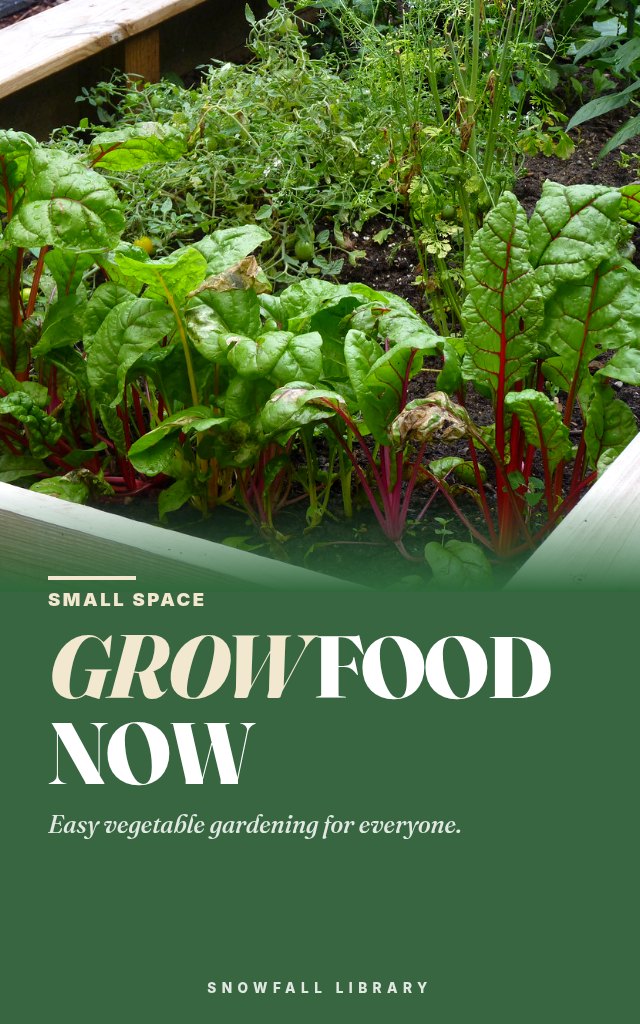
Grow Food Now: Vegetables in Pots, Raised Beds and Sunny Windows
A beginner's plan for real tomatoes and salad greens on a balcony, patio, small yard or windowsill.
About this guide
- Complete beginners with a balcony, patio, small yard or sunny window
- Apartment dwellers who assume they don't have room
- Anyone who wants homegrown tomatoes, herbs and salad greens
- New gardeners overwhelmed by advice written for big backyards
- A clear read on your sun and space before you spend money
Product details
| Publisher | Snowfall Library (founded by Max) |
|---|---|
| Format | PDF Guide |
| Length | 20+ pages |
| Language | English |
| Delivery | Instant download after payment |
| Reads on | Phone, tablet, Kindle app or computer |
| Category | Home and Garden |
Better together
Add these to your order and save 35% on each one.
Book description
The tomatoes at the store taste of nothing. You've got a balcony with a few hours of afternoon sun, or a windowsill that's warm by noon, and a nagging feeling you could grow something better. You've just never grown anything.
This guide starts where most gardening books skip ahead: with your actual space. Before you buy a single pot, you'll read your sunlight and size up what you have. Then it gets specific, with container sizes for different vegetables, soil mix recipes, frost-date planting math and a simple watering and feeding plan. When outdoor space runs out, it shows you how to grow up a trellis and grow inside under lights.
Who it's for
- Complete beginners with a balcony, patio, small yard or sunny window
- Apartment dwellers who assume they don't have room
- Anyone who wants homegrown tomatoes, herbs and salad greens
- New gardeners overwhelmed by advice written for big backyards
What you'll walk away with
- A clear read on your sun and space before you spend money
- Container sizes, soil recipes and a raised bed setup, even a small one
- The right crops for small spaces, and how to start seeds and transplant them
- Planting calendars based on frost dates, with watering and feeding schedules
- Vertical and grow-light growing, natural pest control, harvest timing and a first season plan for your setup
Start small. Eat well.
What's inside
- Read Your Space Before You Buy Anything
- Containers, Raised Beds and Soil
- Choosing and Starting Your Crops
- Planting Calendars, Watering and Feeding
- Growing Up and Growing Inside
- Protecting, Harvesting and Your First Season Plan
- Your Toolkit
Look inside
Read Your Space Before You Buy Anything
You have a spot in mind. Maybe it is a balcony off the living room, a concrete patio behind a rental, a strip of yard beside the driveway, or a window ledge that gets "pretty good light, I think." You have seen photos of tomato vines spilling over railings and baskets of lettuce on apartment tables, and part of you wonders whether that is possible for you or only for people with real gardens and green thumbs.
Here is the honest answer: the single biggest factor in whether your small-space garden produces food is not your skill, your soil, or how much money you spend. It is light. Plants turn light into food, and the food they make is the food you eat. A plant that gets enough light forgives a lot of beginner mistakes. A plant that does not get enough light will disappoint you no matter what else you do right.
So before you buy a single pot or seed packet, you are going to measure your light. This section shows you exactly how, with no special equipment, and then shows you how to match what you have to what you can grow.
Why "sunny" is not specific enough
Most people describe their space with words like "bright," "sunny," or "gets afternoon sun." Those words are useful for houseplants. They are not useful for vegetables, because vegetables care about the number of hours of direct sun, and our memories are terrible at counting hours.
Direct sun means you can see the sun itself from the spot, or the spot casts a crisp, sharp-edged shadow. Bright shade, where the area is well lit but the shadow is soft and fuzzy, is not direct sun. A room that feels bright at noon may only get two hours of actual sun on the windowsill, because the sun moves across the sky and the window frame, the building next door, or a tree cuts it off.
Vegetables fall into three broad light groups:
| Light group | Direct sun per day | What grows well |
|---|---|---|
| Full sun | 6 to 8 hours or more | Tomatoes, peppers, eggplant, cucumbers, squash, beans, most herbs from the Mediterranean (basil, rosemary, thyme, oregano) |
| Part sun | 4 to 6 hours | Bush beans, peas, beets, carrots, radishes, chard, kale, broccoli, parsley, cilantro |
| Part shade | 2 to 4 hours (plus bright indirect light) | Lettuce, spinach, arugula, Asian greens, mint, chives, scallions |
A simple rule to remember: if you eat the fruit (tomato, pepper, cucumber, squash), the plant needs the most sun. If you eat the root, it needs a medium amount. If you eat the leaves, it can manage with the least. This rule is not perfect, but it will steer you right most of the time.
The sun audit: measuring your light in one day
You need one clear day, your phone, and a notebook (or a notes app). If your days are mostly cloudy, pick the clearest you can get and note it.
- Pick your candidate spots. Walk your space and choose every place you might put a plant: each section of the balcony railing, the floor near the sliding door, the patio corners, each windowsill. Give each spot a short name, like "rail left," "rail right," "floor by door," "kitchen sill." 2. Check every hour on the hour. Starting at 8 a.m. (earlier in midsummer), go to each spot and note whether it is in direct sun (sharp shadow) or not. Set a repeating phone alarm so you do not forget. 3. Take a photo at each check. Stand in the same place each time and photograph the whole space. Later you can flip through the photos and see the light move. This is also a great record to compare against in a different season. 4. **Stop when the sun ...
Readers also browse

Check Texts, Emails, Jobs and Stores Before You Pay

Identify, Cancel and Recover Payments You Didn't Expect

Start a Business With No Idea and No Money

A 30-Day Reset for Phone Habits and Focus