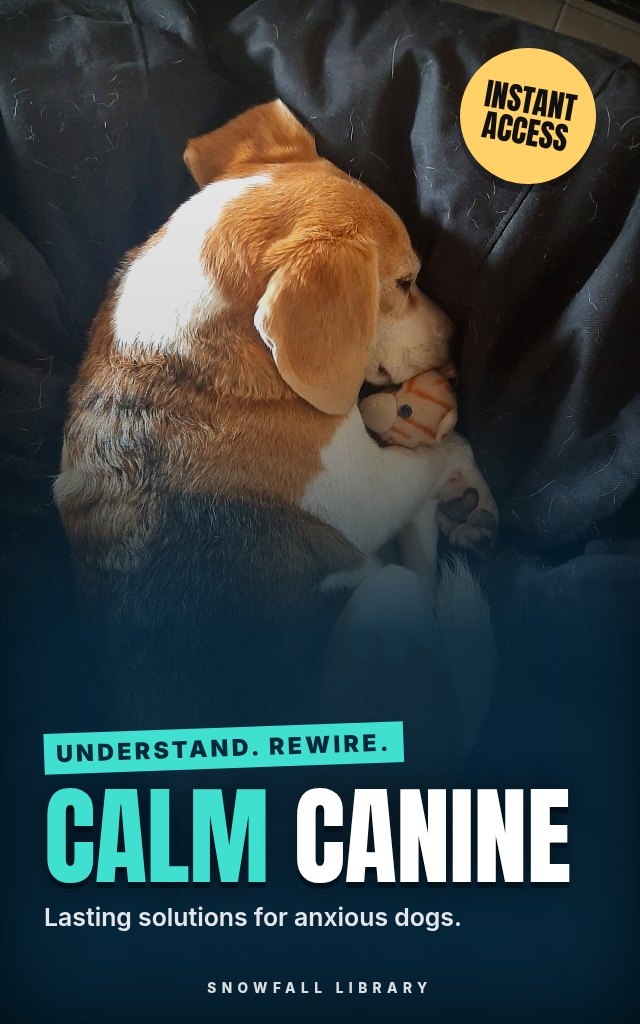
Beyond Reactivity: A Compassionate Guide to Understanding and Helping Your Leash Reactive Dog
Understand your dog's reactivity and build a confident companion for peaceful walks
About this guide
- Dog owners dealing with frustrating leash reactivity.
- New parents learning to manage unexpected reactive behaviors.
- Owners who want a kinder approach than traditional training.
- People who feel embarrassed or limited by their dog's behavior.
- The insight to pinpoint your dog’s triggers and the feelings behind them.
Product details
| Publisher | Snowfall Library (founded by Max) |
|---|---|
| Format | PDF Guide |
| Length | 20+ pages |
| Language | English |
| Delivery | Instant download after payment |
| Reads on | Phone, tablet, Kindle app or computer |
| Category | Pets & Dog Training |
Better together
Add these to your order and save 35% on each one.
Book description
Do you dread walks because of barking, lunging, or anxiety? It's time to understand what's really going on.
Who it's for
- Dog owners dealing with frustrating leash reactivity.
- New parents learning to manage unexpected reactive behaviors.
- Owners who want a kinder approach than traditional training.
- People who feel embarrassed or limited by their dog's behavior.
What you’ll gain
- The insight to pinpoint your dog’s triggers and the feelings behind them.
- Simple management techniques to make walks safer right away.
- A plan to build confidence and focus, even around distractions.
- Methods for shifting your dog’s emotional response with desensitization.
- More peaceful outings, and a stronger bond with your dog.
What's inside
- Understanding Reactivity: The Why Behind the Behavior
- Management: Your First Line of Defense
- Phase 1: Building a Foundation, Engagement and Confidence
- Phase 2: Desensitization and Counter-Conditioning, Changing the Emotional Response
- Phase 3: Generalization and Real-World Application
- Beyond the Leash: Addressing Reactivity in Other Contexts
- The Owner's Journey: Self-Care and Emotional Wellbeing
Look inside
Understanding Reactivity: The Why Behind the Behavior
Okay, here's the first section of your book, aiming for empathetic, practical, and scientifically grounded content.
What Is Reactivity? Defining the Behavior and Recognizing the Signs
Let’s be honest. You’re here because walks aren’t the peaceful, enjoyable experiences you dreamed of. Maybe your dog barks furiously at other dogs, straining against the leash until you feel stressed and tense. Perhaps they lunge, hackles raised, making you fear for everyone’s safety. Or it could be a more subtle anxiety, a stiffening of the body, whale eye (showing the whites of their eyes), and a low growl that sends a shiver down your spine. You’re likely feeling frustrated, embarrassed, and maybe even a little helpless. It’s okay. You’re not alone, and understanding what’s happening is the first step towards changing things.
Reactivity isn't a diagnosis, but rather a description of a set of behaviors. It’s how your dog expresses an uncomfortable emotional state when something triggers them on leash. Think of it as your dog saying, “I’m really unsure about that, and I need some space!” It’s different than true aggression, which is rooted in a desire to harm or displace. Reactivity is usually driven by fear, frustration, or anxiety, your dog is trying to increase distance between themselves and whatever is bothering them.
Defining the Reactive Behaviors
The first step is pinpointing exactly what your dog does when they react. It’s more than just “barks at other dogs.” Getting specific helps you understand the intensity of the reaction and track progress later. Here's a breakdown of common reactive behaviors:
- Barking: A vocal display, ranging from a few sharp barks to a sustained barrage.
- Lunging: An attempt to move towards the trigger, often with the dog pulling hard on the leash. This isn’t necessarily about attack; it's often a desperate attempt to create more distance, ironically achieved by moving forward.
- Growling: A warning signal, indicating your dog is uncomfortable and needs space. Never punish a growl, it's your dog communicating, and suppressing it can lead to a bite without warning.
- Whining/Yelping: Signals of distress, often indicating fear or anxiety.
- Hackles Raised: The fur along the back standing up, a physiological response to arousal.
- Stiffening: A tense, frozen body posture, indicating your dog is bracing for something.
- Whale Eye: Showing the whites of the eyes, often indicating discomfort or anxiety.
- Lip Licking/Yawning (out of context): These can be displacement behaviors, indicating stress. A yawn when your dog isn't tired, or lip licking when they haven't eaten, can be signs of anxiety.
- Pacing/Restlessness: An inability to settle, indicating heightened arousal.
Action step: For the next three walks, keep a simple log. Note exactly what your dog does when they encounter a trigger. Be specific! Instead of “barked,” write “three sharp barks followed by sustained barking for five seconds.”
Reactivity vs. Aggression: What's the Difference?
This is a crucial distinction. While reactivity can escalate to aggression, they are not the same thing.
| Feature | Reactivity | Aggression |
|---|---|---|
| Primary Motivation | Fear, frustration, anxiety | Threat, dominance, resource guarding |
| Body Language | Tense, whale eye, lip licking, barking, lunging | Stiff, direct stare, raised hackles, snarling, snapping |
| Goal | Increase distance, escape discomfort | Harm, displace, control |
| Predictability | Often escalates with proximity | Can be unpredictable, less tied to proximity |
Warning: If you are unsure whether your dog’s behavior is reactivity or aggression, consult with a certified professional dog trainer or veterinary behaviorist. Accurately identifying the underlying motivation is essential for choosing the right approach.
Recognizing Pre-Reactive Cues: The Early Warning Signs
Often, reactivity doesn't just happen. There are subtle cues your dog gives before they fully react. Learning to read these early warning signs allows you to intervene before the behavior escalates. These are often called “subtle stress signals.”
Here are ...
Readers also browse
Understanding and Resolving Problem Behaviors with Kindness and Science
Happy Family
Understanding & Healing Your Companion's Fear & Worry