
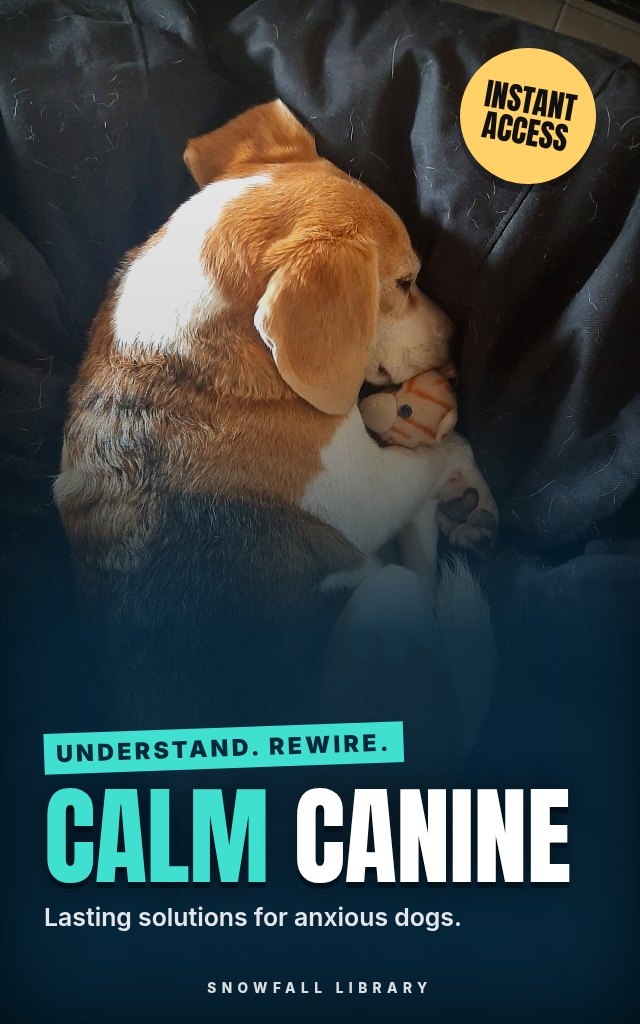
Rewired: A Neuroscience-Based Guide to Calming Your Anxious Dog
A neuroscience-based guide to easing anxiety and building resilience in dogs
About this guide
- Dog owners wanting real solutions for persistent anxiety, beyond simple obedience.
- Those who want to understand the *source* of their dog’s fear, not just mask the symptoms.
- People who believe in science-backed, compassionate methods and a stronger dog-owner bond.
- Owners ready for long-term calm, creating a peaceful home environment.
- The ability to accurately read your dog’s subtle anxiety signals, understanding what they're communicating.
Product details
| Publisher | Snowfall Library (founded by Max) |
|---|---|
| Format | PDF Guide |
| Length | 20+ pages |
| Language | English |
| Delivery | Instant download after payment |
| Reads on | Phone, tablet, Kindle app or computer |
| Category | Pets |
Better together
Add these to your order and save 35% on each one.
Book description
Does your dog’s worry create stress for the whole family? You've likely tried training, but some anxieties need a deeper look. This guide offers a fresh approach.
Who it's for
- Dog owners wanting real solutions for persistent anxiety, beyond simple obedience.
- Those who want to understand the source of their dog’s fear, not just mask the symptoms.
- People who believe in science-backed, compassionate methods and a stronger dog-owner bond.
- Owners ready for long-term calm, creating a peaceful home environment.
What you'll walk away with
- The ability to accurately read your dog’s subtle anxiety signals, understanding what they're communicating.
- A clear explanation of the neuroscience behind canine anxiety, revealing what’s happening inside their mind.
- Practical exercises to build emotional resilience, helping your dog handle stressful moments with confidence.
- Strategies for managing common triggers like loud noises and being left alone, reducing fear.
- A plan for ongoing support and knowing when to seek professional guidance.
What's inside
- Part 1: Decoding Canine Anxiety
- Part 2: Diagnosing Your Dog's Anxiety
- Part 3: The Calm Canine Toolkit
- Part 4: Tackling Common Anxiety Scenarios
- Part 5: Long-Term Management & Seeking Support
Look inside
Part 1: Decoding Canine Anxiety
You’ve spent countless hours trying to soothe your dog, offering comfort when a sudden noise sends them scrambling for cover, feeling helpless as they pace and whine when you prepare to leave, and perhaps even feeling frustrated when their fear seems to override logic and training. You’re not alone. Many dogs experience anxiety, and it can be deeply distressing to witness, and to live with. But understanding what’s happening inside your dog’s brain during these moments is the first, crucial step towards helping them find lasting calm. This isn’t about a ‘bad dog’ or a lack of willpower; it’s about understanding the complex neurological processes at play.
What’s Happening in Your Dog’s Brain?
Anxiety isn't a personality flaw. It's a physiological response, rooted in the brain’s attempt to protect your dog from perceived threats. To understand this, we need to look at a few key brain structures. Think of it like a security system, sometimes it overreacts to harmless stimuli.
- The Amygdala: This is the brain’s emotional center, specifically responsible for processing fear and triggering the fight-or-flight response. In an anxious dog, the amygdala is often hyperactive, meaning it’s easily triggered and oversensitive to potential threats. A normal sound might register as dangerous, prompting a fearful reaction.
- The Prefrontal Cortex: This is the “thinking” part of the brain, responsible for rational thought, decision-making, and inhibiting impulsive reactions. A healthy prefrontal cortex can help calm the amygdala and assess whether a threat is real or imagined. In anxious dogs, communication between the amygdala and prefrontal cortex can be weakened, making it harder to override fearful impulses.
- The Hypothalamus-Pituitary-Adrenal (HPA) Axis: This is the body's central stress response system. When a threat is perceived, the hypothalamus releases hormones that activate the adrenal glands, releasing cortisol, the “stress hormone.” While cortisol is essential for short-term survival, chronic activation of the HPA axis due to ongoing anxiety can have detrimental effects on your dog’s physical and mental health.
Action step: Visualize these three structures as a team. The amygdala is the alarm, the prefrontal cortex is the rational evaluator, and the HPA axis is the emergency response system. In an anxious dog, the alarm is easily triggered, the evaluator is struggling to function, and the emergency response system is constantly on high alert.
The Neuroplasticity Promise: Rewiring the Anxious Brain
The good news is that the brain isn’t fixed. It’s remarkably adaptable, a concept called neuroplasticity. This means that through repeated experiences, we can actually change the structure and function of the brain. For anxious dogs, this means we can help strengthen the connection between the amygdala and prefrontal cortex, and regulate the HPA axis, gradually reducing their reactivity.
This isn’t about suppressing their feelings; it’s about teaching their brain to interpret situations differently, building confidence, and developing coping mechanisms. It takes time and consistency, but the potential for positive change is significant.
How Anxiety Differs Neurologically
Let’s compare a confident dog to an anxious dog when exposed to a novel object, say, a brightly colored umbrella.
| Feature | Confident Dog | Anxious Dog |
|---|---|---|
| Amygdala Response | Brief, moderate activation. Quickly assessed as non-threatening. | Intense, prolonged activation. Interprets as potentially dangerous. |
| Prefrontal Cortex | Engages quickly, analyzes the object, determines it’s safe. | Struggles to engage. Fear overrides rational thought. |
| HPA Axis | Temporary, mild cortisol release. Returns to baseline quickly. | Prolonged, elevated cortisol levels. Remains in a state of heightened alert. |
| Behavior | Curious investigation, sniffing, potential playful interaction. | Withdrawal, hiding, barking, trembling, attempts to escape. |
Pro tip: Think of neuroplasticity like creating a new pathway in a forest. The more you travel that path, the clearer and easier it becomes. We're aiming to create stronger, calmer pathways in your dog's brain.
The Role of Cortisol: Short-Term Survival, Long-Term Problems
Cortisol, released ...
Readers also browse

Understanding and Resolving Problem Behaviors with Kindness and Science

A Neuroscience-Based Guide to Emotional Resilience
Peaceful Leash Walks

Understanding and Healing Your Dog's Anxiety