
The Exam Mastery System: A Cognitive Science Guide to Studying Smarter, Remembering More, and Walking Into Any Exam Calm
A Cognitive Science Guide to Studying Smarter, Remembering More, and Walking Into Any Exam Calm
About this guide
- College students balancing a heavy course load
- High school students aiming for strong college applications
- Professionals preparing for critical certification exams
- Anyone who learns differently and needs a structured approach
- A personalized study plan tailored to your strengths and the subject matter.
Product details
| Publisher | Snowfall Library (founded by Max) |
|---|---|
| Format | PDF Guide |
| Length | 20+ pages |
| Language | English |
| Delivery | Instant download after payment |
| Reads on | Phone, tablet, Kindle app or computer |
| Category | Education |
Better together
Add these to your order and save 35% on each one.
Book description
Feeling overwhelmed by exams? Do study sessions leave you exhausted but unprepared? This guide offers more than just tips, it’s a complete, science-backed system for lasting knowledge and calm confidence.
Who it's for
- College students balancing a heavy course load
- High school students aiming for strong college applications
- Professionals preparing for critical certification exams
- Anyone who learns differently and needs a structured approach
What you'll gain
- A personalized study plan tailored to your strengths and the subject matter.
- Techniques to absorb information efficiently, avoiding burnout.
- Methods for actively retrieving knowledge, solidifying memory, and identifying gaps.
- Strategies to manage test anxiety and perform with clarity under pressure.
- A framework for continued learning, ensuring knowledge sticks long after the exam.
What's inside
- Part 1, How Your Memory Actually Works
- Part 2, Phase One: Plan Before You Study
- Part 3, Phase Two: Acquire Content Without Drowning
- Part 4, Phase Three: Retrieve, Test, and Fix
- Part 5, Phase Four: Exam Day Performance
- Part 6, Subject-Specific Playbooks
- Part 7, Defeating Procrastination, Anxiety, and Distraction
- Part 8, Retention for Life: After the Exam and Beyond
Look inside
Part 1, How Your Memory Actually Works
You studied for six hours yesterday. You reread the chapter twice, highlighted the important parts in yellow, rewatched the lecture at 1.5x speed, and reviewed your notes until they felt familiar. You went to bed feeling prepared.
This morning, a classmate asked you one question from that chapter. You blanked. The answer was somewhere in your head, you could almost see the highlighted sentence on the page, but you could not produce it. You recognized everything. You could recall almost nothing.
That gap between recognition and recall is the single biggest problem in how students study. It is not a motivation problem. It is not an intelligence problem. It is a technique problem, and it has a name: the illusion of competence.
This section will show you exactly why your current habits feel productive but fail you, then walk you through a 10-minute self-test that proves it with your own material. By the end, you will have identified your top three passive habits and written a one-line replacement for each one.
Why Effort Is Not the Same as Learning
Here is the uncomfortable pattern that shows up again and again in memory research: the study methods that feel best produce the worst retention, and the methods that feel hard produce the best.
Rereading a chapter for the third time feels smooth. The sentences flow. You nod along. That fluency is your brain recognizing material it has seen before, and recognition creates a feeling of knowing. But exams do not test recognition. They test production. Nobody hands you the answer and asks if it looks familiar. You have to pull it out of memory with nothing in front of you.
Cognitive psychologists call this the difference between fluency and retrieval strength. Fluency is how easily information flows into your head while you are looking at it. Retrieval strength is whether you can produce it later with the book closed. Fluency is cheap and instant. Retrieval strength only grows when you practice retrieving, and retrieving feels bad. It feels like struggle, like not knowing, like failure.
That is the trap. Passive study feels like success. Active study feels like failure. So students drift toward the methods that feel good and away from the ones that work.
Warning: The better you feel about a study session while it is happening, the more suspicious you should be. Ease is not evidence of learning. It is usually evidence of recognition.
The Five Passive Habits (and What They Actually Do)
Before the self-test, get precise about what "passive" means. These are the five most common habits that create fluency without building retrieval strength:
| Habit | Why it feels productive | What it actually builds |
|---|---|---|
| Rereading chapters or notes | Material gets smoother each pass | Recognition, not recall |
| Highlighting and underlining | Feels like decision-making | A colorful page; most students highlight 30-60% of text, which means no real selection happened |
| Rewatching lectures | Comfortable, low effort | Familiarity with the lecturer, not the content |
| Copying or rewriting notes | Looks like work, fills pages | Transcription; the hand moves while the mind idles |
| "Looking over" flashcards | Quick, easy, done | Exposure to answers you never had to produce |
Notice what all five share: the information is in front of you the entire time. Your brain never has to generate anything. And generation is the whole game. Every time you pull a fact out of memory instead of looking at it, that memory gets measurably stronger. Every time you look instead of pulling, you train yourself to need the page.
The fix is not to study longer. Students who switch from rereading to self-testing routinely get better results in less time, because one honest retrieval attempt is worth several passive exposures. The fix is to change what you do ...
Readers also browse
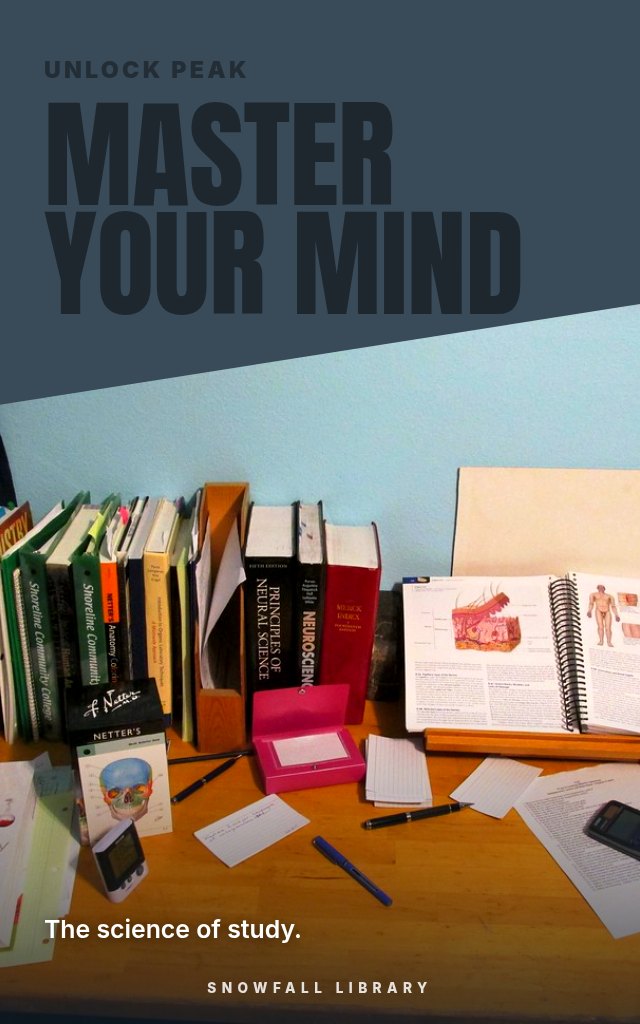
An Evidence-Based Study System for High-Stakes Exams
Study Methods Built on How Memory Actually Works

Better Portraits, Food, Travel and Low Light Shots
Build a Self-Study System You'll Actually Keep Using